
What Is Sexual Psychotherapy? A Clear, Honest Overview
Sexual psychotherapy is a specialized form of talk therapy that helps individuals and couples work through the emotional, psychological, and relational factors that affect their sexual health and intimacy.
Here is a quick summary of what it involves:
- What it is: A talk-based therapy — no physical contact with the therapist, ever
- Who it’s for: Individuals or couples dealing with sexual concerns, intimacy barriers, or relationship challenges
- What it treats: Low libido, erectile dysfunction, premature ejaculation, painful sex, trauma, orgasm difficulties, and more
- How it works: A licensed therapist helps you identify root causes, set goals, and practice evidence-based techniques at home
- How long it takes: Anywhere from a few weeks to several months, depending on your situation
Sexual well-being is deeply connected to overall mental and emotional health. Yet for many people, it is one of the hardest things to talk about — even with a partner. Research shows that 3 in 10 men and 4 in 10 women experience sexual problems at some point in their lives. Despite how common these struggles are, most people never seek help.
That gap between need and action is exactly why sexual psychotherapy exists.
I’m Dr. Neil Cannon, an AASECT Certified Sex Therapist and Supervisor of Sex Therapy with decades of experience helping individuals and couples navigate the full complexity of sexual psychotherapy. As a Licensed Marriage and Family Therapist and instructor at the University of Michigan School of Social Work Sexual Health Certificate Program, I’ve seen how the right support can transform lives and relationships.
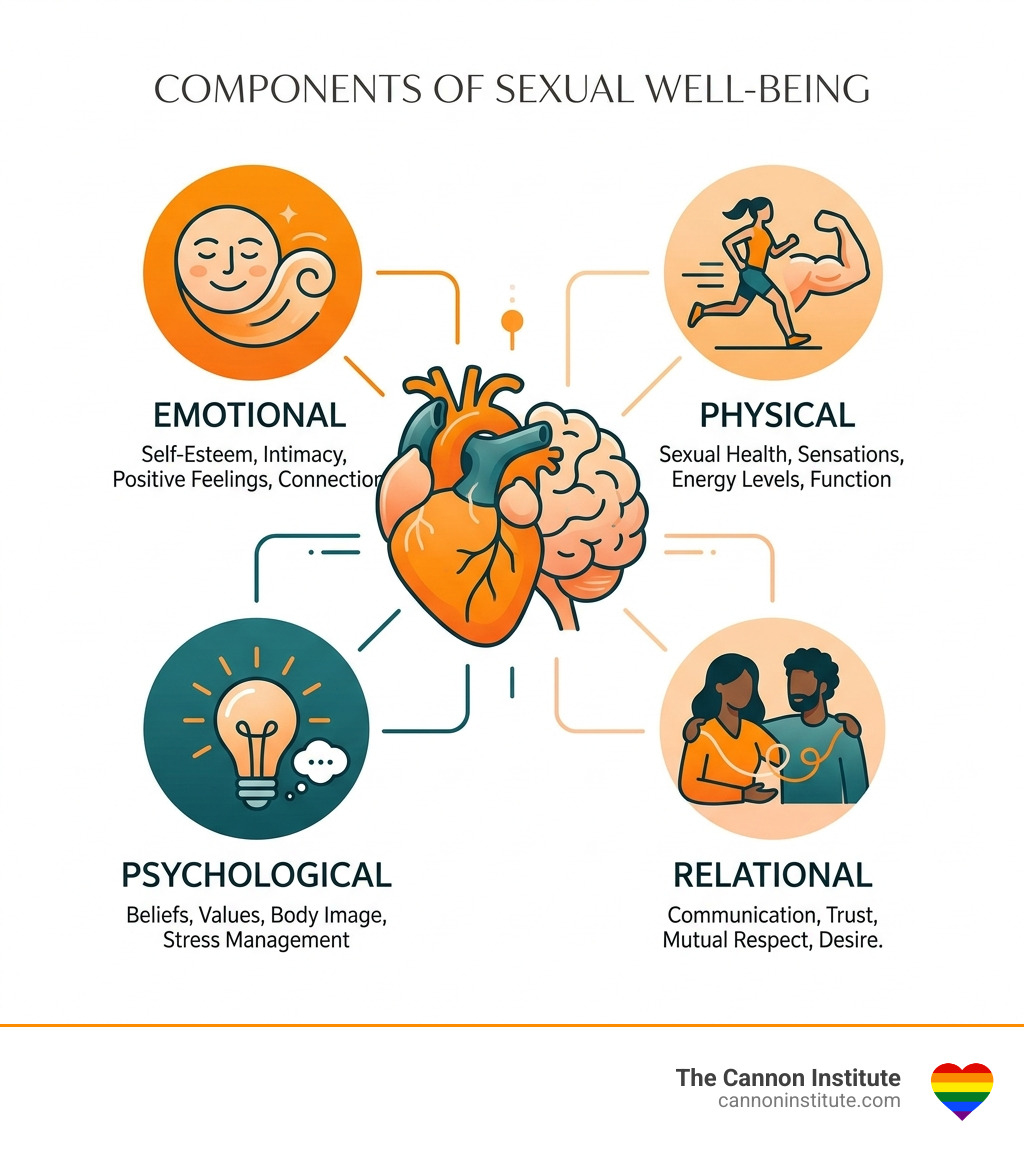
Simple sexual psychotherapy glossary:
Understanding Sexual Psychotherapy and Its Role in Modern Wellness
When we think about health, we often focus on the gym or our annual physicals. However, sexual health is a vital pillar of modern wellness that often remains in the shadows. Sexual psychotherapy, often referred to as psychosexual therapy, is a specialized branch of mental health care designed to bring these issues into the light. It isn’t just about “fixing” a physical function; it is about dismantling the emotional roadblocks that prevent us from experiencing full, vibrant lives.
At its core, What Is Psychosexual Therapy? involves exploring the psychological currents that influence our intimate lives. Whether you are navigating the aftermath of a medical diagnosis, dealing with high levels of stress, or simply feeling disconnected from your body, this form of therapy provides a sanctuary for exploration. In our Denver, CO practice, we view Professional Sex Therapy as an essential tool for holistic health. We believe that when you improve your sexual well-being, you often see a “halo effect” that improves your confidence, your mood, and your overall relationship satisfaction.

The Difference Between Sexual Psychotherapy and Sex Counseling
It is common to hear the terms “sex therapy” and “sex counseling” used interchangeably, but there are distinct differences in clinical depth. Sex counseling is often shorter-term and focuses on providing education, information, and specific techniques to resolve a narrow problem. It is excellent for “how-to” questions or basic education.
In contrast, sexual psychotherapy dives deeper into the psychological and emotional layers of an issue. A therapist trained to Sex Therapy standards—specifically those set by AASECT (the American Association of Sexuality Educators, Counselors and Therapists)—is equipped to handle complex cases involving trauma, deep-seated anxiety, or long-term relationship dysfunction. Becoming a certified sex therapist is a rigorous journey, often taking nine years or more of education and supervised clinical experience. This ensures that the professional you are working with understands the intricate dance between the mind and the body.
Common Concerns Addressed in Sexual Psychotherapy
You might be surprised by the sheer variety of concerns that bring people through our doors in Denver. Sexual issues rarely exist in a vacuum; they are often the result of a “biopsychosocial” mix—a combination of biological, psychological, and social factors.
Common issues we address include:
- Erectile Dysfunction (ED): While often treated with medication, ED frequently has a psychological component like performance anxiety. Erectile Dysfunction Sex Therapy helps break the cycle of “spectatoring,” where a man becomes an anxious observer of his own performance rather than a participant.
- Low Libido: Mismatched desire is one of the most frequent reasons couples seek help. We help individuals Regain Sexual Desire by exploring the “brakes” and “accelerators” of their libido.
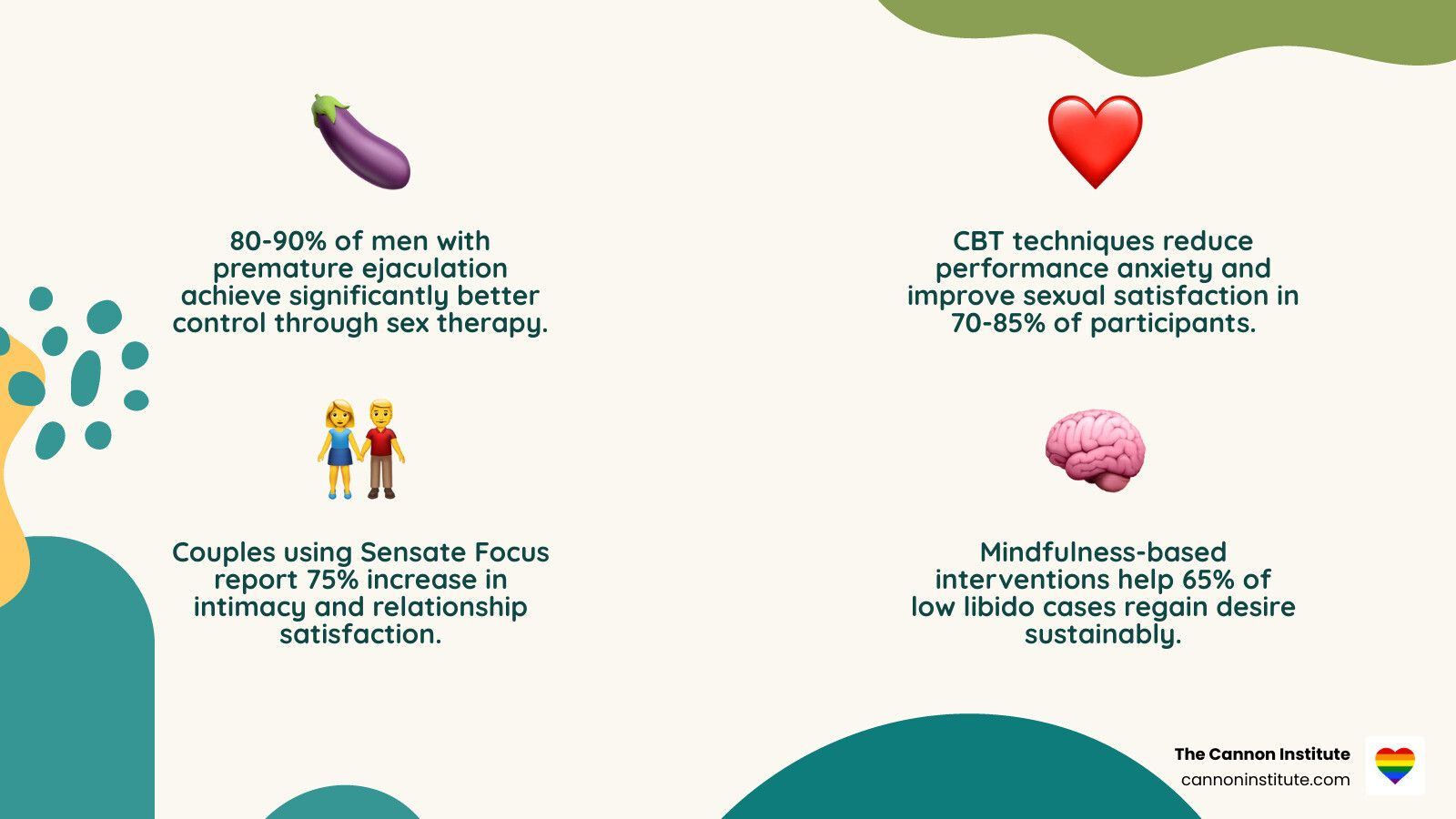
- Premature Ejaculation: This affects about one-third of males in the US. Therapy is incredibly effective here, with success rates of 80% to 90%.
- Painful Intercourse: Conditions like vaginismus or dyspareunia can make intimacy feel like a chore or a source of fear.
- Sexual Trauma: For the 1 in 3 women and 1 in 7 men who have experienced childhood sexual abuse, therapy provides a path to reclaiming their bodies and their pleasure.
Whether you are dealing with Male Sexual Dysfunction or a general sense of Low Libido, we provide a non-judgmental space to find solutions.
Evidence-Based Techniques: From CBT to Sensate Focus
We don’t just sit and talk about your childhood (though history is important!). Sexual psychotherapy is highly active and goal-oriented. We use a variety of evidence-based tools to help you reach your objectives.
One primary tool is Cognitive Behavioral Therapy (CBT). CBT helps you identify the unhelpful thoughts—like “I’m a failure if this doesn’t work”—that trigger physical anxiety. By changing these thought patterns, we can often change the physical response. We also incorporate mindfulness-based interventions, which are scientifically proven to help people (especially those recovering from illness like cancer) reconnect with their physical sensations and reduce the “noise” of a busy, anxious mind.

The Power of Sensate Focus and Homework
One of the “gold standard” techniques in our field is Sensate Focus, originally developed by the pioneering researchers Masters and Johnson in the 1960s. The beauty of Sensate Focus is that it takes the pressure off. It is a series of behavioral exercises you do at home with your partner (or sometimes solo) that gradually rebuild intimacy.
| Stage | Goal | Description |
|---|---|---|
| Stage 1: Non-Genital Touch | Reduce Anxiety | Partners take turns touching non-erogenous zones to focus on sensation without the goal of arousal. |
| Stage 2: Genital Touch | Explore Sensation | Inclusion of erogenous zones, but with a strict “no intercourse” rule to keep pressure low. |
| Stage 3: Mutual Touching | Communication | Both partners engage simultaneously, practicing “hand-over-hand” guidance to show what feels good. |
| Stage 4: Sensual Play | Integration | Moving toward more erotic play while maintaining a focus on the journey rather than the “destination.” |
These exercises are part of the “homework” that makes Intimacy Therapy Your Path To Stronger Relationships. By practicing these in the privacy of your home, you build a new language of touch and communication.
Emotionally Focused Therapy (EFT) for Couples
At The Cannon Institute, we often integrate Emotionally Focused Therapy (EFT) into our work. We believe that humans are wired for connection from birth. When a relationship feels unsafe or disconnected, the bedroom is usually the first place to suffer.
EFT looks at the “dance” of your relationship. Are you caught in a cycle of blame and withdrawal? Does one partner pursue while the other shuts down? By creating emotional safety and addressing attachment styles, we lay the foundation for a thriving sex life. Whether we are doing Relationship Therapy or specialized Affair Recovery Counseling, our goal is to help you feel securely attached to your partner so that vulnerability becomes possible again.
Navigating the Process: What to Expect in Your Sessions
Walking into a therapist’s office to talk about your sex life can feel daunting. We get it. That’s why we strive to make the process as transparent and comfortable as possible.
Your journey usually begins with an initial assessment. This is a “biopsychosocial” deep dive where we look at your medical history, your upbringing, your current relationship dynamics, and your specific goals. We aren’t just looking for what’s “wrong”; we’re looking for your strengths. What Does A Sex Therapist Do during this time is act as a detective and an educator, helping you connect dots you might have missed.
From there, we move into Individual Therapy or couples sessions. A typical course of treatment can last from a few weeks for straightforward issues to several months for more complex, long-standing concerns. We meet you where you are, setting a pace that feels safe but productive.
Ethics, Boundaries, and Confidentiality in Sexual Psychotherapy
Let’s clear up the biggest myth right now: There is absolutely no physical contact between the therapist and the client. No nudity, no demonstrations, and no sexual activity occur in the office. This is a fundamental ethical boundary. If a “therapist” ever suggests otherwise, they are not practicing legitimate sexual psychotherapy and are likely violating the law.
We adhere to strict AASECT Certification and Standards and HIPAA compliance. Your privacy is our highest priority. Everything discussed in our sessions remains confidential, providing you with a truly safe space to be honest about your fears, desires, and history.
Addressing Specialized Issues: Addiction and Trauma
Sometimes, the challenges aren’t about a lack of function, but about behaviors that have spiraled out of control. We provide specialized support for Sex Addiction Out Of Control Compulsive Sexual Behavior And Porn Addiction. In these cases, we use a combination of behavioral strategies and deep emotional work to help individuals regain their integrity and build healthier relationship patterns.
Similarly, we offer trauma-informed care for those whose sexual lives are haunted by past experiences. We understand that triggers and “flashbacks” can happen in the bedroom, and we work gently to help you stay present and grounded in your body.
Frequently Asked Questions about Sexual Psychotherapy
Does sex therapy involve any physical contact with the therapist?
No. This is a common misconception fueled by sensationalist media. Sexual psychotherapy is a “talk therapy.” While we may assign “homework” involving touch or intimacy for you to complete in the privacy of your own home, the therapist never participates in or observes these acts. Our role is to facilitate your progress through conversation, education, and psychological intervention.
How do I know if it is time to seek professional help?
A good rule of thumb is: if your sexual health is causing you distress, disrupting your relationship, or making you feel anxious or depressed, it is time to reach out. You don’t need to wait for a “catastrophe.” Many people seek therapy simply because they want to improve their connection or explore their identity. If you find yourself avoiding intimacy or feeling like your “brakes” are always on, we can help you Regain Sexual Desire.
What are the success rates for these treatments?
The success rates for many sexual dysfunctions are remarkably high. For example, studies show that 80 to 90 percent of men who engage in therapy for premature ejaculation achieve significantly better control. Using Solution Focused Therapy, we aim for sustainable change that lasts long after you leave our office. Success in therapy isn’t just about “functioning”; it’s about feeling more confident, connected, and satisfied in your skin.
Conclusion: Reclaiming Your Intimacy and Connection
Sexual health is not a luxury; it is an inherent and beneficial dimension of being human. Whether you are navigating a specific dysfunction or simply want to deepen the bond with your partner, sexual psychotherapy offers a research-based path toward healing.
At The Cannon Institute in Cherry Creek, Denver, we specialize in this intentional, targeted process. Led by Dr. Neil Cannon, our team provides immediate interventions for diverse individuals and couples across Colorado. We don’t just want to help you solve a problem; we want to help you reclaim the joy, hope, and connection that you deserve.
Your journey to a more fulfilling intimate life starts with a single conversation. If you are ready to move beyond the couch and into a life of greater connection, we are here to guide you.