
Why Punch the Monkey Shows Us the Value of Relationships
Punch the Monkey shows us the value of relationships in one of the most simple and honest ways possible — by showing what happens when we don’t have them.
Here’s the short answer to what Punch’s story teaches us:
- Emotional comfort matters more than physical survival alone. Punch chose a soft plush toy over nothing, because warmth — even simulated warmth — is a biological need.
- Rejection doesn’t have to be the end. Abandoned by his mother and initially pushed away by his troop, Punch kept reaching out.
- Surrogate support can bridge the gap. A stuffed orangutan toy gave Punch the emotional stability to eventually build real relationships.
- Resilience is built through connection. With time, patience, and support, Punch began forming genuine bonds with other macaques.
- His story mirrors something deeply human. The longing to belong, the sting of rejection, and the hope that connection is still possible.
Punch is a baby Japanese macaque born in July 2025 at Ichikawa City Zoo. After being abandoned by his mother and rejected by his troop, zookeepers hand-reared him and gave him a plush orangutan toy for comfort. He clung to it everywhere — while sleeping, while walking, even using it as a pillow. Videos of him went viral, racking up millions of views worldwide. People didn’t just find him cute. They felt him.
His story isn’t just about a monkey and his toy. It’s about what all of us need: a safe place to land.
I’m Dr. Neil Cannon, a Licensed Marriage and Family Therapist and AASECT Certified Sex Therapist with decades of experience helping individuals and couples build the kind of deep, secure connections that Punch the Monkey shows us the value of relationships so powerfully illustrates. The science and the emotion behind Punch’s journey are exactly what I work with every day in my practice at The Cannon Institute.
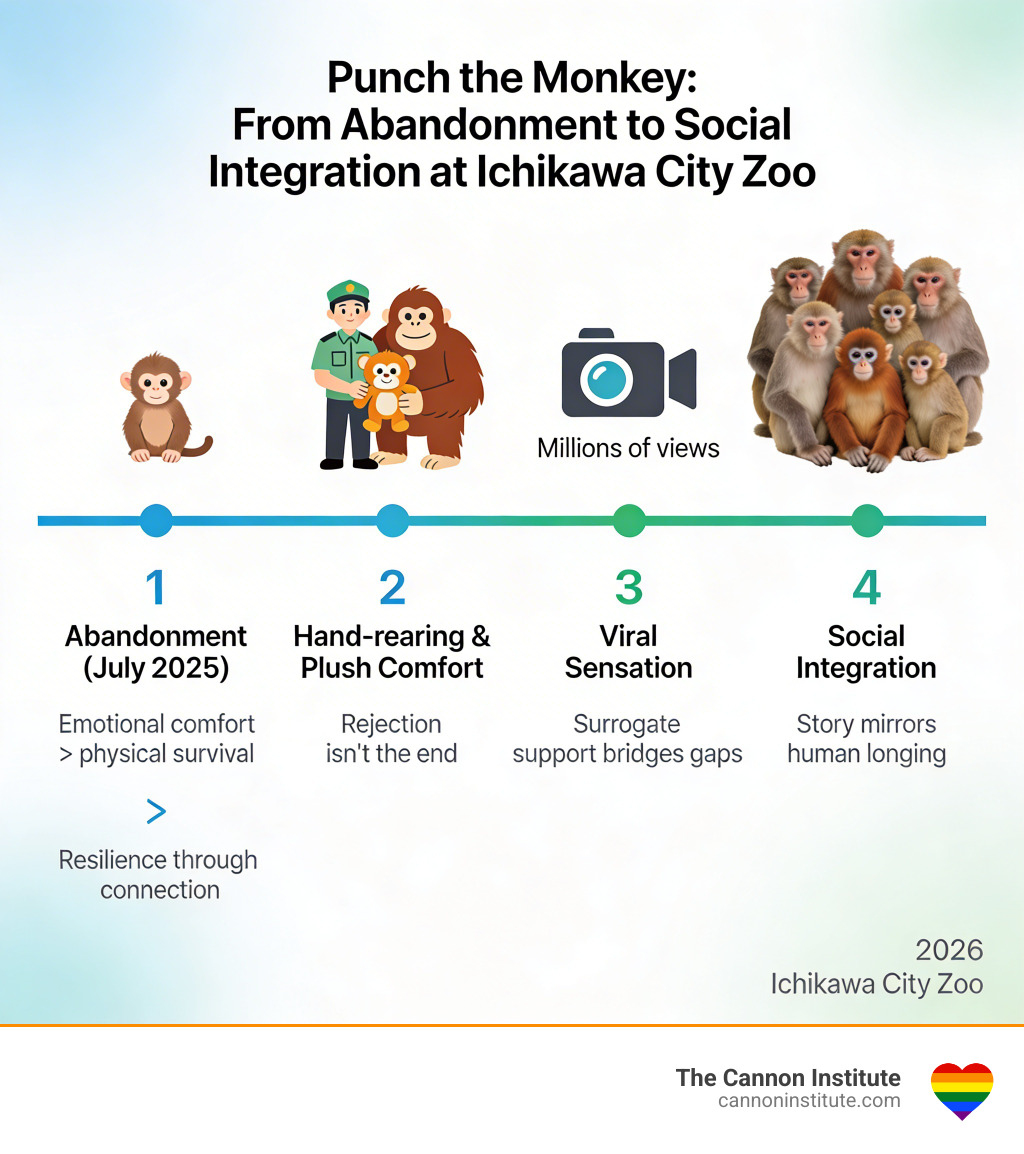
Simple guide to Punch the Monkey shows us the value of relationships:
The Science of Comfort: How Punch the Monkey Shows Us the Value of Relationships
When we look at Punch, we aren’t just seeing a cute animal; we are witnessing a biological imperative in action. For primates—humans and macaques alike—survival is about more than just calories and hydration. It is about “contact comfort.” This term describes the physical and emotional security we feel when we are held, touched, and cared for.
Punch’s deep attachment to his plush toy highlights a core principle of attachment theory. This theory suggests that for healthy development, an infant needs to form a secure bond with at least one primary caregiver. When that caregiver is missing, the brain seeks out a surrogate to regulate its nervous system.
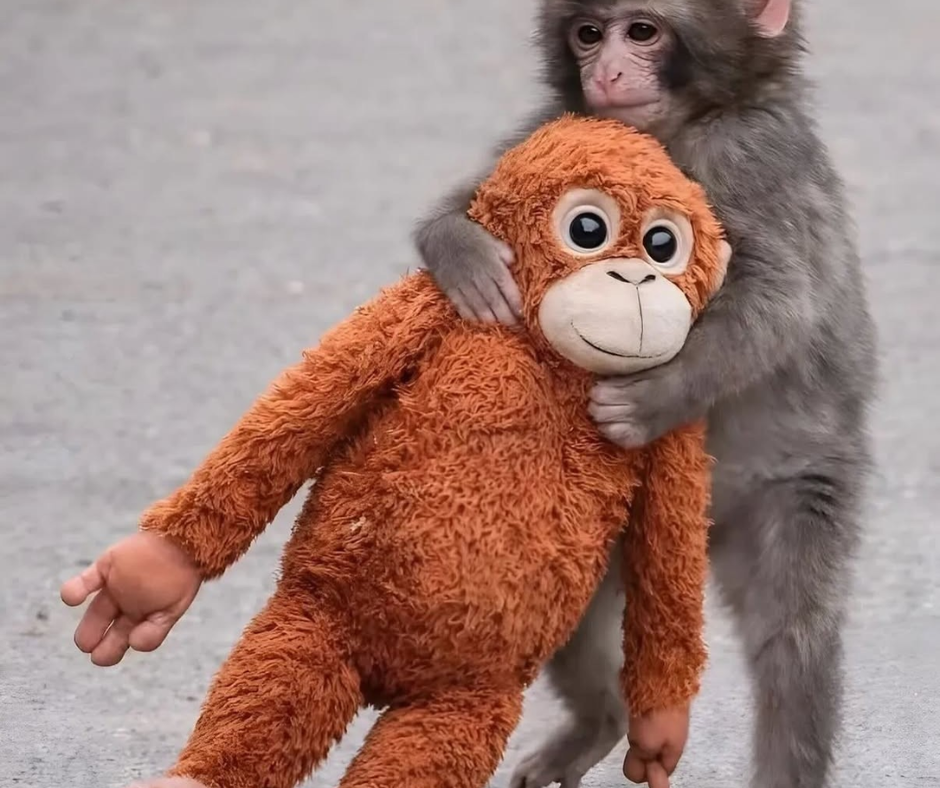
In our work at The Cannon Institute, we often discuss what intimacy is beyond just physical acts. Intimacy is the feeling of being “seen” and safe. For Punch, that $20 IKEA DJUNGELSKOG toy wasn’t just fabric and stuffing; it was a source of tactile reassurance that allowed his brain to rest. Without that “safe base,” the stress of abandonment can become overwhelming, leading to long-term developmental struggles.
From Plushies to Peers: Punch the Monkey Shows Us the Value of Relationships in Social Integration
The ultimate goal for the zookeepers at Ichikawa City Zoo was never for Punch to live his life with a toy. The goal was social integration. However, moving from a stuffed animal to a troop of living, breathing (and sometimes grumpy) macaques is a steep learning curve.
According to a Washington Post video of Punch’s progress, the transition was gradual. He had to learn the complex “language” of the troop: how to groom others, how to interpret a scolding from an elder, and how to play without causing offense.
This mirrors the journey many of our clients take in individual therapy. Often, we have to unlearn old “survival” behaviors—like clinging to metaphorical plushies—to learn how to navigate the messy, rewarding dynamics of real-world relationships. For Punch, being “scolded” by the troop wasn’t necessarily bullying; it was a form of social education. He was learning the boundaries of his community, which is the first step toward true belonging.
Finding Support in Unexpected Places: Punch the Monkey Shows Us the Value of Relationships and Surrogate Comfort
One of the most heartwarming aspects of this story is how the human world responded. When the public saw Punch dragging his orange friend across the enclosure, a wave of global empathy followed. Fox News reported on the emotional value of toys, noting how millions of people saw their own childhood needs reflected in Punch’s grip.
Even corporate entities stepped in. IKEA Japan, led by Petra Fare, donated replacement DJUNGELSKOG toys to ensure Punch would always have a clean, soft friend during his transition. This global rally reminds us that we are hardwired to care for the vulnerable.
In sex therapy and relationship counseling, we often look at where our “comfort objects” are today. For adults, these might be work, hobbies, or even social media. While these surrogates can provide temporary relief, Punch’s story reminds us that they are ultimately meant to be bridges back to human (or macaque) connection.
The Harlow Connection: Attachment Theory and the Need for Softness
To truly understand why Punch the Monkey shows us the value of relationships, we have to look back at the 1950s. Psychologist Harry Harlow conducted a series of famous—and controversial—experiments with rhesus monkeys that changed the way we understand love.
Before Harlow, the prevailing school of thought was “behaviorism.” Behaviorists believed that babies only loved their mothers because the mothers provided food. Harlow challenged this by giving infant monkeys two surrogate “mothers”:
- A “wire mother” that provided milk through a bottle but was cold and hard.
- A “cloth mother” made of soft terry cloth that provided no food but offered warmth.
The results were undeniable. The monkeys spent nearly 22 hours a day clinging to the cloth mother, only leaving her for a few minutes to eat from the wire mother. When frightened, they always ran to the soft mother.
| Feature | Wire Mother | Cloth Mother (Punch’s Plushie) |
|---|---|---|
| Primary Offering | Physical Nourishment (Food) | Emotional Nourishment (Comfort) |
| Monkey’s Preference | Low (only for survival) | High (for security) |
| Psychological Impact | High Stress/Anxiety | Reduced Cortisol/Safety |
| Result | Failure to thrive socially | Foundation for future relationships |
While Harlow’s classic studies on maternal contact provided the foundation for modern attachment theory, they are also a dark chapter in science. By modern standards, separating infants from their mothers is considered unethical and cruel. Today, animal welfare and primate rights are prioritized, which is why the zookeepers at Ichikawa City Zoo focused on “hand-rearing” with the goal of re-integration rather than isolation.
In our practice of relationship therapy, we see the “Harlow effect” every day. Couples often struggle because they are providing “food” (financial security, a shared home) but forgetting the “cloth” (softness, kindness, and emotional warmth). Punch reminds us that without the “softness,” the relationship eventually feels like a cage.
Lessons in Resilience: Why Punch’s Journey Resonates with Humans
Why did the hashtag #がんばれパンチ (“Hang in there, Punch”) take over social media? It’s because Punch is a mirror for our own lives. At some point, we have all felt like the “outcast” monkey. We have all experienced the sting of universal rejection or the heavy weight of loneliness.
Punch’s journey teaches us three major lessons about resilience:
- Accept Help Where You Find It: Whether it’s a therapist, a support group, or a literal stuffed animal, there is no shame in using a “crutch” while you heal.
- Keep Showing Up: Punch didn’t hide in a corner forever. He kept venturing out into the troop, even after being shoved or ignored.
- Growth is Non-Linear: There were days Punch was “bullied” and days he was groomed. Progress isn’t a straight line; it’s a series of small wins.
At The Cannon Institute, we help people find strategies for a fulfilling intimate life by tapping into this same resilience. Just as Punch eventually found a friend to groom him, we believe that with the right tools, anyone can move from isolation to a place of secure belonging.
Frequently Asked Questions about Punch the Monkey
Why did Punch’s mother and troop initially reject him?
Maternal abandonment can happen for many reasons in the wild and in zoos. Sometimes it’s due to the mother’s own lack of social experience, or she may perceive the infant as weak. According to The Guardian on why animals abandon offspring, the stress of the environment or social hierarchy can also play a role. Once a baby is hand-reared by humans, they smell different and act differently, which can make the initial re-entry into the troop difficult as other mothers act protectively over their own young.
Is the “bullying” seen in viral videos normal for monkeys?
Yes. The Ichikawa City Zoo released a statement explaining that what looks like “bullying” to human eyes is often normal social behavior for macaques. Being dragged or shoved is how the troop teaches a youngster boundaries and social rank. Importantly, zookeepers noted there was no serious aggression or intent to harm; Punch was simply being “schooled” in how to be a monkey.
How has the public and corporate world supported Punch?
The support has been unprecedented. Beyond the millions of social media views, the zoo saw a massive spike in visitors who wanted to cheer Punch on in person. NBC News highlighted the global rally, including the donation of multiple DJUNGELSKOG plushies from IKEA Japan. This collective “cheering” helped provide the resources and attention needed to ensure Punch’s successful integration.
Conclusion
The story of Punch the Monkey is a powerful reminder that we are all searching for the same thing: connection. Whether we are a baby macaque in Japan or a couple in Denver, CO, the need for emotional nourishment is the bedrock of our well-being.
At The Cannon Institute, led by Dr. Neil Cannon, we specialize in taking these complex emotional needs and turning them into actionable, research-based interventions. We don’t just want you to “survive” your relationships; we want you to thrive in them. Through intentional process and targeted support, we provide sustainable change and a renewed sense of hope.
If you feel like you’ve been “clinging to a plushie” or struggling to find your place in your own “troop,” we are here to help. You don’t have to navigate the journey to connection alone. Start your journey with relationship therapy today and discover the value of truly secure bonds.