
What Is ED? A Clear Answer Before We Dive In
What is E.D. — short for Erectile Dysfunction — is a condition where a man cannot get or keep an erection firm enough for sex. It is one of the most common sexual health concerns faced by men of all ages.
Quick answer:
- What it is: The inability to get or maintain an erection sufficient for satisfying sexual activity
- Other names: An outdated term is impotence, a term we never use
- How common: Between 30 and 50 million men in the United States are affected
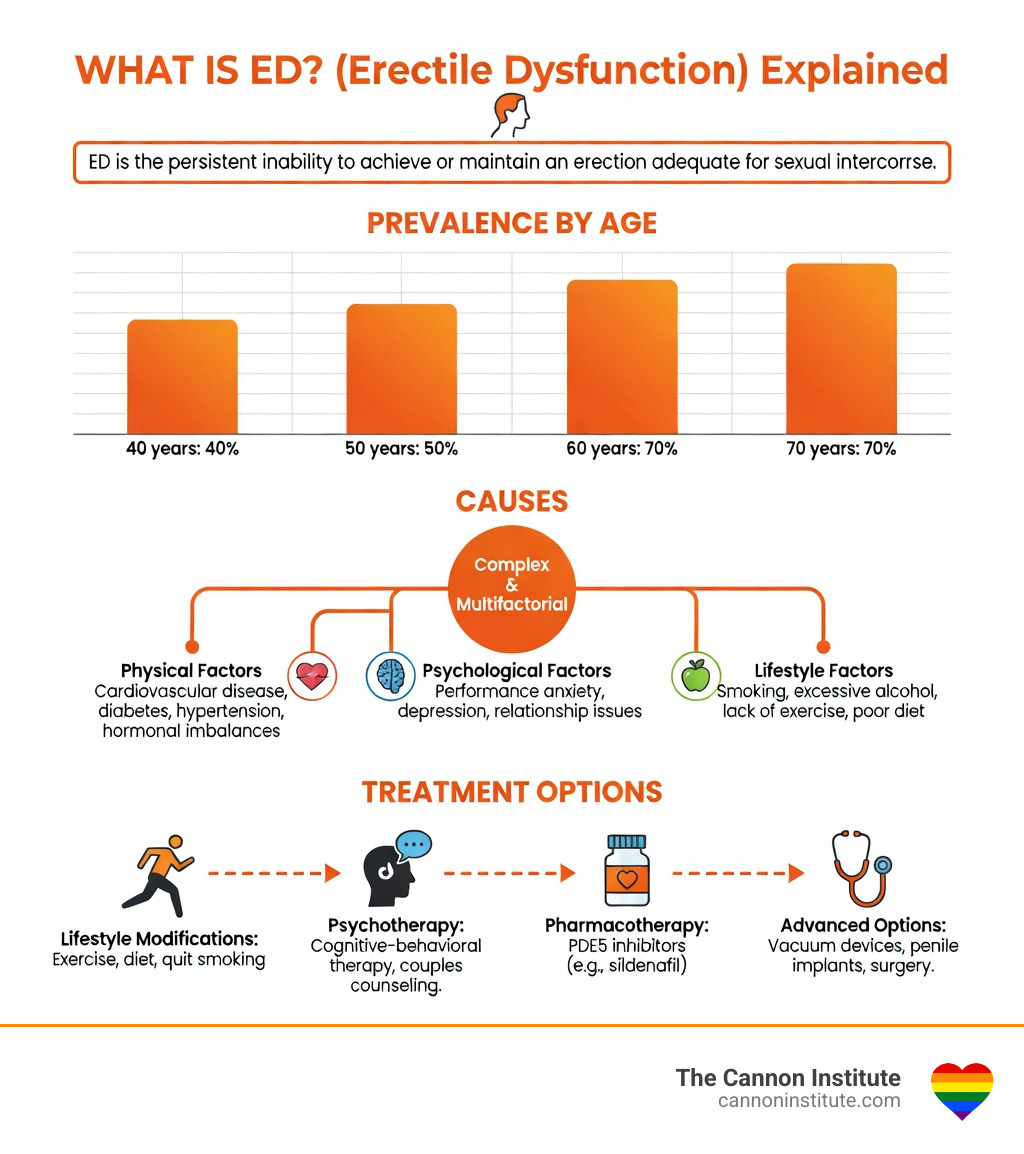
- Who it affects: Men of all ages, though risk increases with age — about 40% of men at age 40, rising to 70% by age 70
- Is it normal aging? Yes, just ask any 70 year-old male if their erections are better than when they were 20
- Is it treatable? Yes — E.D. is a sexual functioning issue that can almost always be treated successfully
ED is not just a physical issue. It touches self-esteem, relationships, and emotional well-being. Many men feel embarrassed or alone — but the reality is, it is extremely common and very treatable.
It is also worth knowing early: ED can sometimes be an early warning sign of underlying health conditions like heart disease or diabetes. That makes understanding it more important than many people realize.
I’m Dr. Neil Cannon, an AASECT Certified Sex Therapist with decades of experience helping individuals and couples navigate sexual health challenges — including what is ed and its deeply personal impact on intimacy and relationships. In this guide, I’ll walk you through everything you need to know, from causes and diagnosis to treatment and hope.
Simple guide to what is ed:
Understanding the Basics: What is ED?

When we talk about erectile dysfunction, we are looking at a condition that is often misunderstood. For a long time, the medical community and the public used the term “impotence.” However, we find that “erectile dysfunction” is a much more accurate and less stigmatizing way to describe the experience.
At its core, what is ed involves a disruption in the complex process of male sexual arousal. This process isn’t just “down there”; it involves the brain, hormones, emotions, nerves, muscles, and blood vessels. If any of these components are out of sync, an erection can be difficult to achieve or maintain.
According to scientific research on ED in the United States, the condition affects as many as 30 million men across the country. It is important to remember that having trouble occasionally is not necessarily a cause for alarm. Stress or a few too many drinks can happen to anyone. However, when the problem becomes persistent or routine, it is time to look closer at the underlying causes.
How common is erectile dysfunction?
If you are currently struggling with what is ed, you are in very large company. The statistics are quite eye-opening:
- Between 30 million and 50 million men in the U.S. have some form of ED.
- At least 12 million men between the ages of 40 and 79 experience it regularly.
- Prevalence is closely tied to age: roughly 40% of men are affected by age 40, and that number jumps to 70% by the time they reach age 70.
While these numbers show that ED becomes more frequent as we age, we want to emphasize that it is not a “natural” part of aging. Many men remain sexually functional well into their 80s. When ED occurs, it is usually a signal that something else in the body or mind needs attention.
Defining the clinical criteria for what is ed
In a clinical setting, we often look to the Diagnostic and Statistical Manual of Mental Disorders (DSM-5-TR) to define “Erectile Disorder.” To meet the official diagnosis, the symptoms must:
- Persist for at least six months.
- Cause significant distress in the individual’s life.
- Occur on approximately 75% to 100% of sexual occasions.
Medical professionals may also use the Erection Hardness Score (EHS), a simple four-point scale that helps men describe the quality of their erections, ranging from “penis is larger but not hard” to “penis is completely hard and fully rigid.” This helps us move away from vague descriptions and toward a clearer understanding of the physical reality.
Identifying the Root Causes of Impotence
To understand what is ed, we have to look at the “plumbing” and the “wiring.” An erection requires blood to flow into the penis and stay there. Anything that blocks blood flow or interrupts nerve signals can cause issues.
Research into the Cardiovascular Implications of ED has shown that the small arteries in the penis often show signs of blockage before the larger arteries in the heart do. This is why we often call ED the “canary in the coal mine” for heart health.
Physical and lifestyle factors in what is ed
Most cases of ED (about 90%) have a physical root or contributing factor. These include:
- Vascular Disease: Atherosclerosis (clogged arteries) and high blood pressure can restrict the blood flow needed for an erection.
- Diabetes: Men with diabetes are three times more likely to develop ED because high blood sugar can damage both small blood vessels and nerves.
- Obesity and Metabolic Syndrome: Carrying extra weight can lead to hormone imbalances and increased inflammation.
- Medications: Certain blood pressure medicines, antidepressants, and even some over-the-counter hair loss treatments can have sexual side effects.
- Nerve Damage: Conditions like multiple sclerosis or injuries to the spinal cord can disrupt the signals from the brain to the penis.
- Lifestyle Choices: Smoking cigarettes increases the risk of ED by 51% because it damages the lining of the blood vessels. Excessive alcohol use and illicit drugs also play a major role.
One physical approach we often recommend is strengthening the pelvic floor. You can learn more about Kegel Exercises for Men to help improve blood flow and muscle control in the pelvic region.
The psychological side of what is ed
Even when there is a physical cause, the mind almost always gets involved. Once a man experiences a “failure” in the bedroom, it is very common to develop performance anxiety. This creates a vicious cycle: you worry about getting an erection, the worry triggers a stress response (adrenaline), and adrenaline effectively “kills” the erection.
Other mental health and sexual function factors include:
- Stress: Whether from work or home, high stress levels keep the body in “fight or flight” mode, which is the opposite of the relaxed state needed for arousal.
- Depression: A loss of interest in activities often extends to a loss of libido.
- Relationship Conflicts: If there is a lack of emotional safety or unresolved anger between partners, the body may react by shutting down sexually.
- Low Self-Esteem: Negative body image or feeling “less than” can make it difficult to stay present during intimacy.
Symptoms, Diagnosis, and When to See a Doctor
The primary symptom of what is ed is a persistent change in the quality of your erections. This might look like:
- Being able to get an erection sometimes, but not every time you want sex.
- Getting an erection that doesn’t last long enough for satisfying intercourse.
- Being completely unable to get an erection at any time.
When you visit a professional in Denver or elsewhere in Colorado, the diagnostic process usually involves a thorough medical and sexual history. We might ask: “Do you wake up with erections in the morning?” If the answer is yes, it suggests the “plumbing” is working, and the cause might be more psychological or relationship-based.
Common diagnostic tests include:
- Physical Exam: Checking the penis and testicles for nerve sensation and blood flow.
- Blood Tests: Checking for low testosterone, diabetes (A1C), and cholesterol levels.
- Ultrasound: Using sound waves to see how blood flows into the penis.
- Nocturnal Tumescence Test: Using a device to see if you have involuntary erections during sleep.
Exploring Treatment Approaches for ED
This section will discuss various approaches to managing ED, emphasizing the importance of a personalized plan developed with healthcare professionals. While medical interventions such as pharmacological treatments, mechanical aids, or surgical options are available and should be thoroughly discussed with a qualified medical doctor, The Cannon Institute specializes in providing comprehensive therapeutic and psychological support for ED.
We believe in a holistic view of sexual health. While pills like Viagra or Cialis (PDE5 inhibitors) are famous for helping about 7 out of 10 men, they don’t address the emotional or relational roots of the problem. For more details on the full range of options, see our erectile dysfunction therapy complete guide.
Therapeutic and Psychological Support
At The Cannon Institute, we specialize in the “human” side of what is ed. We often find that even if a man takes a pill, he still feels anxious or disconnected from his partner. Sex therapy and erectile-dysfunction-sex-therapy help by:
- Breaking the Anxiety Cycle: We use Cognitive Behavioral Therapy (CBT) and mindfulness to help you stay in your body rather than in your head.
- Improving Communication: We help couples talk about sex without shame or blame.
- Emotionally Focused Therapy (EFT): We work to build emotional safety, which is the foundation for sexual arousal.
- Addressing “Spectatoring”: This is when you “watch” yourself during sex to see if you’re performing, which actually prevents the erection from happening.
Our goal is to help you move from “performance” to “connection.” You can read more about the broader category of male-sexual-dysfunction and how we approach it.
Lifestyle changes and natural prevention
Often, the best “medicine” for ED is found in your daily habits. According to Harvard Medical School’s 5 natural ways to overcome ED, simple changes can make a massive difference:
- The Mediterranean Diet: Focus on leafy greens, fruits, legumes, and healthy fats. These foods improve vascular health.
- Exercise: Walking just 30 minutes a day can lower the risk of ED significantly.
- Weight Management: A healthy weight improves testosterone levels and reduces the strain on your heart.
- Quit Smoking: Stopping smoking can restore the health of your blood vessels and improve erectile function.
- Sleep: Sleep apnea and chronic sleep deprivation are major contributors to low testosterone and ED.
Frequently Asked Questions about Erectile Dysfunction
Is ED a sign of heart disease?
Yes, it can be. Because the arteries in the penis are much smaller (1-2 mm) than the ones in the heart (3-4 mm), they often show signs of “clogging” or damage first. If you are experiencing what is ed, it is a good idea to have your cardiovascular health checked by a doctor.
Can young men experience ED?
Absolutely. While ED is more common in older men, many men in their 20s and 30s seek our help. In younger men, the cause is frequently related to performance anxiety, high levels of stress, or lifestyle factors. There is also ongoing research into the role of pornography; while not a direct cause for everyone, “porn-induced” ED is often actually a form of performance anxiety where the brain becomes conditioned to a specific type of stimulation that is hard to replicate with a partner.
Are natural supplements safe for ED?
We urge extreme caution here. The FDA has issued many warnings about “natural” supplements sold online. Many have been found to contain undeclared prescription drug ingredients (like sildenafil) in unsafe amounts. Always talk to a healthcare professional before trying herbs like Yohimbe or Ginseng.
Conclusion
Understanding what is ed is the first step toward reclaiming your sexual health and your confidence. Whether the root cause is physical, psychological, or a mix of both, there is no reason to suffer in silence.
At The Cannon Institute in Cherry Creek, we provide a safe, inclusive, and research-based environment to help you navigate these challenges. Led by Dr. Neil Cannon, our team uses intentional processes to provide immediate, targeted interventions for individuals and couples. We don’t just want to “fix” a symptom; we want to help you achieve sustainable change and rediscover the joy of intimacy.
If you are ready to move past the frustration and find a path toward healing, we are here for you. You can find more impotence-meaning and more info about intimacy services on our website. There is hope, and there is help. Let’s work together to bring intimacy back into your life.