Understanding Impotence: More Than Just a Medical Term
The impotence meaning extends far beyond a simple medical definition. When you search for this term, you’re likely looking for clarity on a deeply personal and often distressing issue. What you frequently find, however, is a wall of clinical jargon, confusing information, or worse—stigma and shame rooted in outdated ideas about masculinity and performance.
This article is here to cut through that noise. We will explore the true meaning of impotence, why all of us at the Cannon Institute have moved on from the term, and most importantly, how understanding its psychological and physical roots can be the first step toward healing and regaining confidence.
Quick Answer: What Does Impotence Mean?
- Medical Definition: The inability to achieve or maintain a penile erection firm enough for sexual intercourse. This is a functional description, and the condition is now almost universally referred to as Erectile Dysfunction (ED) by healthcare professionals.
- General Definition: A broader sense of powerlessness, weakness, or the inability to change or improve a situation. This can apply to political bodies, emotional states, or personal challenges, and this feeling of helplessness often intertwines with the psychological experience of ED.
- Modern Usage: To reduce the heavy stigma and negative connotations, medical and mental health professionals now use the term “Erectile Dysfunction (ED).” This is an improvement, however we simply refer to ED as Erectile Difficulties. Words matter! This shift emphasizes that it is a treatable condition, not a personal failing.
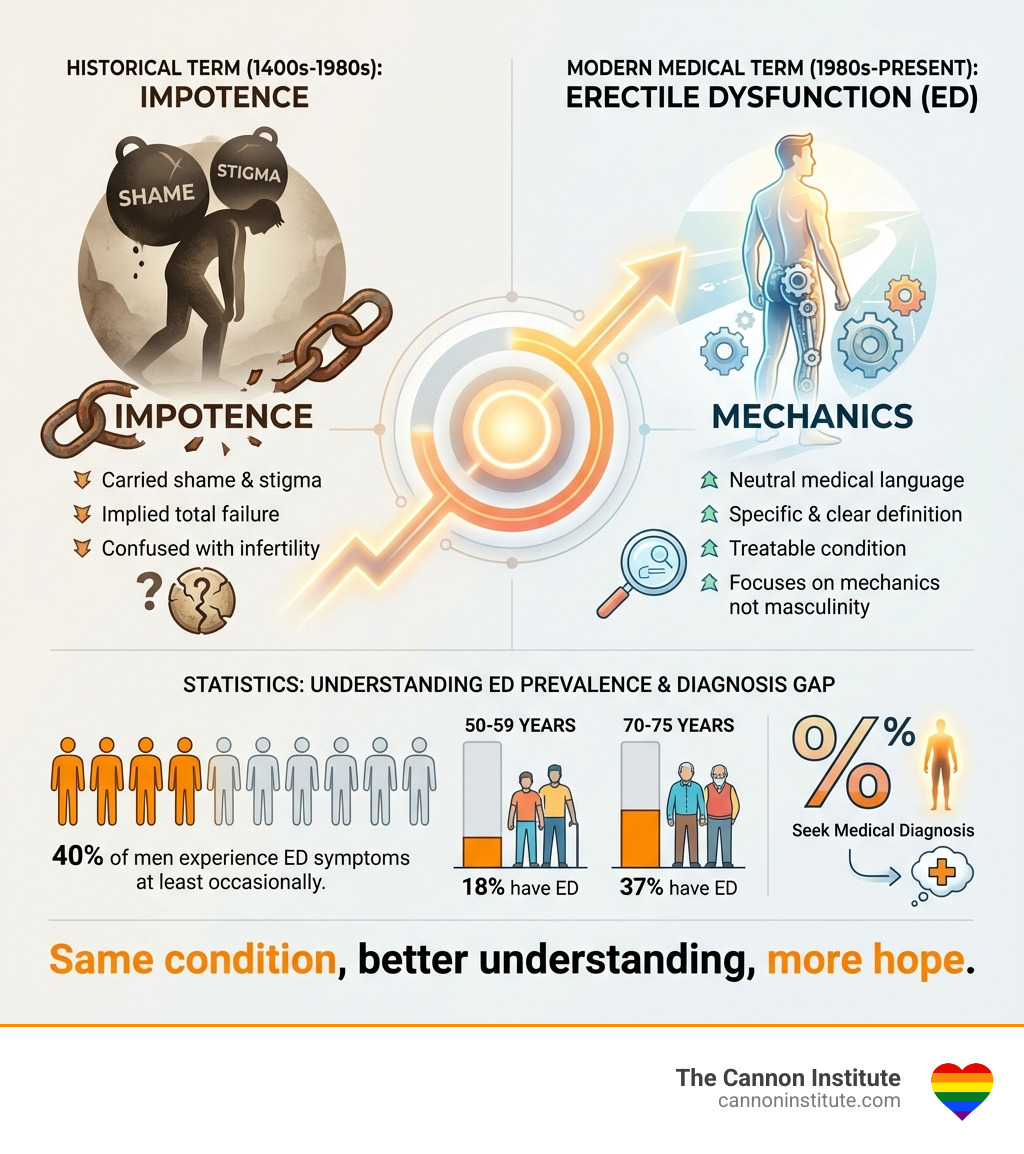
The change in vocabulary from “impotence” to “erectile dysfunction” is more than just political correctness; it represents a fundamental shift in understanding. It acknowledges that this is a common, treatable condition that has nothing to do with a penis owner’s worth or character. Statistics show that more than half of all penis owners between the ages of 40 and 70 experience some form of ED. Despite its prevalence, a staggering 75% of diagnosed cases go untreated. Why? The primary reason is often the embarrassment and shame associated with the old “impotence” label, which silences penis owners and prevents them from seeking the help they need.
Here’s what matters most: ED is almost always treatable. The solution often lies in addressing the root cause, which can be physical, psychological, or a combination of both. Understanding the true meaning of impotence—and recognizing that it encompasses both body and mind—is the first step toward reclaiming your sexual health, intimacy, and confidence.
At The Cannon Institute in Denver, Colorado, we regularly see penis owners and couples who have quietly struggled for years, convinced that nothing can change. When they find that ED is common, understandable, and highly treatable, their entire outlook on sex and relationships begins to shift. Naming the problem accurately is often the doorway to profound relief.
I’m Dr. Neil Cannon, an AASECT Certified Sex Therapist with over 15 years of experience helping individuals and couples steer the complex terrain of sexual health and intimacy here at The Cannon Institute. Throughout my career, I’ve witnessed how a deeper understanding of the psychological and relational dimensions of ED can transform lives. It’s not just about a pill; it’s about addressing the anxiety, communication breakdowns, and loss of confidence that come with it. Let’s explore what you really need to know about this condition and how you can move forward with hope.
When you understand that the old word “impotence” has been replaced with ED, it becomes easier to separate your identity from the symptom. You are not an “impotent penis owner”; you are a person experiencing erectile difficulties at this moment in your life. That difference in language can reduce shame, open up honest conversations with partners, and make it more likely that you will reach out for professional help.
Impotence meaning terms you need:
What is the True Impotence Meaning?
When we talk about the impotence meaning, we’re often delving into two distinct, though related, concepts. Historically, the term “impotence” carried a heavy, judgmental weight, implying a general lack of power or ability that went far beyond the bedroom. It’s a word that echoes through political discourse to describe ineffective governments, in social commentary about powerlessness, and in the deeply personal experiences of helplessness we all face.
In its broadest sense, impotence refers to a lack of power, strength, or vigor, or an inability to change things or influence a situation. We might hear of “political impotence” to describe a government unable to pass legislation, or a personal “feeling of impotence” when facing an impossible challenge like a chronic illness or a difficult family dynamic. This general sense of powerlessness can deeply connect with psychological states, fostering feelings of inefficacy, anxiety, and despair that can, in turn, contribute to sexual difficulties.
For many clients at The Cannon Institute, this broader sense of impotence shows up long before erection problems do. They report feeling stuck in their careers, overwhelmed by financial stress, or defeated by years of unresolved conflict with a partner. Over time, that chronic stress erodes confidence in many areas of life, including sexual performance, and the brain begins to associate sex with pressure and fear rather than pleasure and connection.
However, the primary context for the keyword “impotence meaning” today almost exclusively refers to sexual inability in men. Traditionally, this meant the inability of a man to achieve or maintain a penile erection, hindering participation in sexual intercourse. In historical and legal contexts, it could also refer to male sterility or the inability to consummate a marriage, which often had significant social and legal ramifications, including grounds for divorce or annulment.
The medicalization of sex has profoundly shaped how we understand and discuss conditions like impotence. What was once viewed through a moral, social, or even religious lens—as a sign of weakness or divine punishment—has transitioned into a medical condition amenable to diagnosis and treatment. This crucial shift has been instrumental in moving the conversation from shame-laden silence to open discussion and effective therapeutic intervention.
From a psychological perspective, this shift matters because language frames how we think about ourselves. If impotence is seen as a moral failing, men are more likely to hide, deny, or avoid the issue. When ED is understood as a treatable health condition with emotional and relational components, it becomes something you can actively work on—with your doctor, your therapist, and your partner.
From “Impotence” to “Erectile Dysfunction” (ED)
The medical community has deliberately and almost universally moved away from using the term “impotence” in favor of “Erectile Dysfunction” (ED). This isn’t just a linguistic preference; it’s a strategic choice to reduce stigma and provide a more precise, less pejorative description of the condition. While the impotence meaning colloquially persists, medically and therapeutically, we now refer to it as ED.
Erectile Dysfunction is clinically defined as the persistent or recurrent inability to achieve and maintain an erection sufficient to permit satisfactory sexual performance. This clear, functional definition helps focus on the physiological and psychological mechanisms involved—blood flow, nerve signals, psychological state—rather than assigning a damning label that can feel like a judgment on one’s masculinity.
This medical community shift started gaining traction around the 1980s and became widely accepted with the advent of effective oral medications in the late 1990s. The goal was to remove the negative connotations associated with “impotence,” which often implied a total and permanent failure of masculinity, and replace it with a neutral, descriptive medical term. This change empowers patients, making them feel more comfortable discussing their symptoms and seeking the help they deserve.
For example, studies on sexual health in aging populations, such as the study “Erectile dysfunction in the elderly male” published in the Turkish Journal of Urology, consistently use the term Erectile Dysfunction. This research highlights its prevalence and impact, noting that ED is reported in 18% of males aged 50 to 59 years, and 37% in males aged 70 to 75. Framing it this way shows that ED is a common, often age-related health issue, not a rare personal failing.
In therapy, using the term ED instead of impotence also changes how couples talk to each other. A partner might feel more able to say, “We’re dealing with ED right now” rather than “You’re impotent,” which can feel deeply shaming. That small difference in wording can open the door to collaboration instead of blame.
Here’s a quick comparison to highlight the difference:
| Feature | Impotence (Historical/Broader) | Erectile Dysfunction (ED) (Modern/Medical) |
|---|---|---|
| Terminology | Colloquial, outdated, and broad | Clinical, specific, and current |
| Connotation | Negative, shameful, judgmental | Neutral, descriptive, medical |
| Scope | Vague; could imply sterility or general powerlessness | Precise; refers specifically to erectile function |
| Implication | A failure of masculinity or character | A treatable medical condition |
| Focus | Blames the individual | Focuses on underlying physical or psychological causes |
| Patient Impact | Encourages silence, shame, and avoidance | Empowers patients to seek diagnosis and treatment |
The Broader Definition of Impotence
When you zoom out from the bedroom, the impotence meaning can describe any area of life where you feel stuck, ineffective, or unable to create change. You might experience:
- Political impotence: Watching events unfold in your community or country and feeling like nothing you do will matter.
- Workplace impotence: Being unable to influence decisions at work, despite your best efforts, and gradually losing motivation.
- Emotional impotence: Wanting to support a loved one who is struggling, but feeling powerless to make things better.
These experiences can create a backdrop of chronic stress and helplessness. Over time, your nervous system can become locked into a “fight, flight, or freeze” pattern. In that state, your body prioritizes survival, not sexual arousal. Many men find that when they address these broader feelings of powerlessness—through therapy, boundary-setting, or lifestyle changes—their sexual functioning begins to improve as well.
At The Cannon Institute, we frequently work with clients who come in for ED and find that the deeper work involves confronting where they feel powerless in their lives and relationships. As they regain a sense of agency and choice, erections often become more reliable, and sex becomes less about performance and more about authentic connection.