Why Pro LGBTQ Rights, Pro Human Rights, Pro Sexual Rights Matter More Than Ever
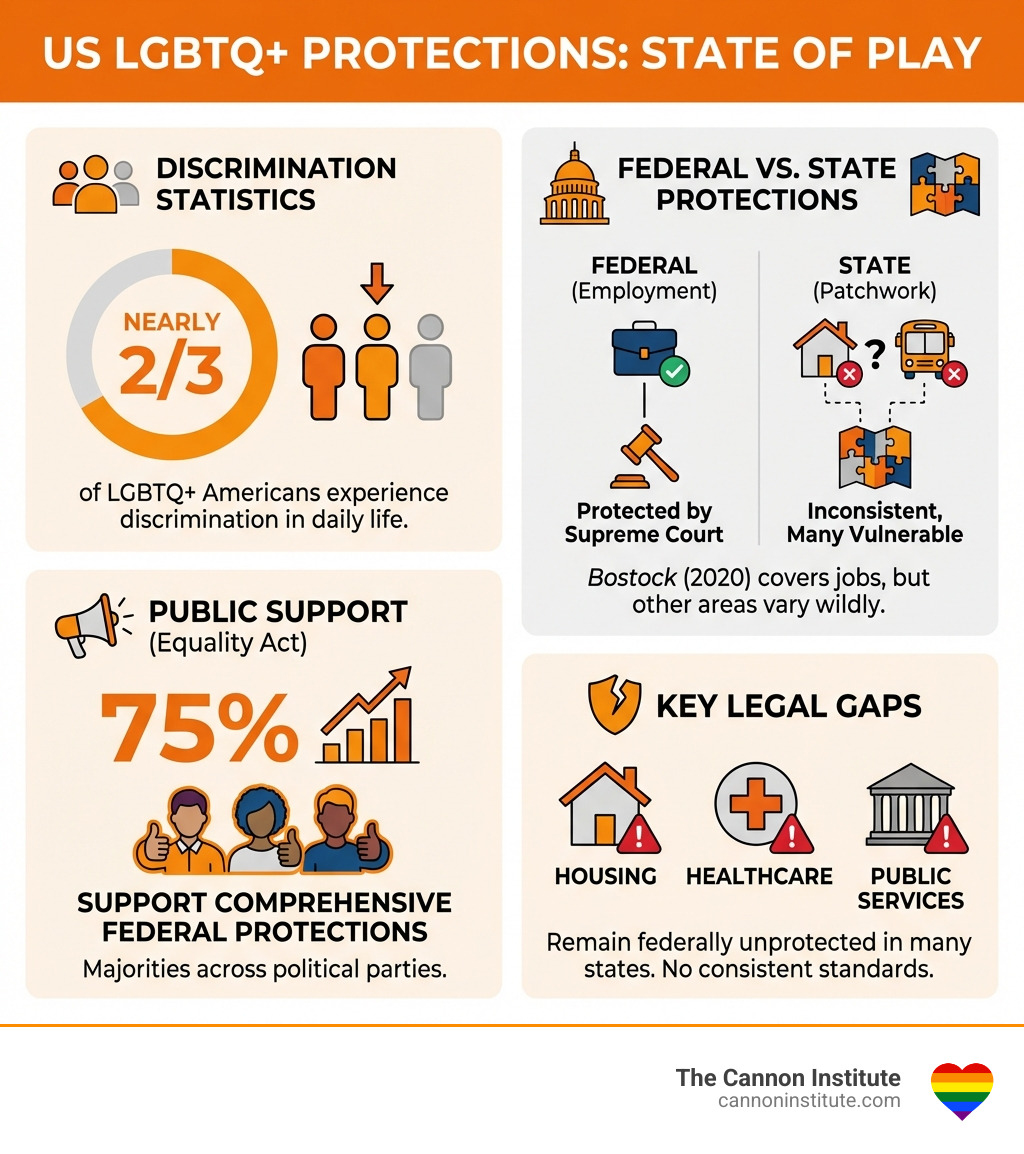
Pro LGBTQ rights, pro human rights, pro sexual rights represent essential protections that millions of Americans still lack today. Despite landmark court victories and growing public support, nearly two-thirds of LGBTQ+ Americans continue to experience discrimination in their daily lives.
Key Facts You Should Know:
- Over 60 countries still criminalize consensual same-sex relationships, with at least six countries can impose the death penalty
- 75% of Americans support comprehensive federal protections like the Equality Act, including majorities across all political parties
- Current protections have critical gaps – while employment discrimination is now prohibited under federal law, housing, public services, and federally funded programs remain unprotected in many states
- State laws create a patchwork of inconsistent protections, leaving LGBTQ+ people vulnerable depending on where they live
The fight for equal rights isn’t just a political issue. It directly affects people’s ability to access healthcare, find housing, keep their jobs, and live without fear of violence or discrimination. The Supreme Court’s 2020 Bostock decision was a major step forward for employment rights, but it left significant gaps in other areas of daily life.
International human rights standards from the United Nations make clear that protecting LGBTI people from violence, discrimination, and criminalization is a core legal obligation of all states. Yet homophobia, biphobia, transphobia, and discriminatory attitudes remain deeply embedded in many cultures worldwide.
As Dr. Neil Cannon, I’ve spent decades working as an AASECT Certified Sex Therapist and Supervisor, specializing in supporting LGBTQ+ individuals and couples through challenges related to pro LGBTQ rights, pro human rights, pro sexual rights. In this guide, I’ll walk you through the organizations leading this fight and what comprehensive protections really mean for people’s lives.
The Global Fight for Pro LGBTQ Rights, Pro Human Rights, Pro Sexual Rights
When we talk about being pro LGBTQ rights, pro human rights, pro sexual rights, we are looking at a global movement that transcends borders. The United Nations has been clear since the early 1990s: discrimination against LGBTI people undermines the universal human rights principles we all hold dear. Every assault on an LGBTQ+ person is an assault on the values of the human family.
International human rights standards emphasize that states have core legal obligations. These aren’t just “suggestions”; they are requirements to protect people from violence, prevent torture, and repeal laws that criminalize consensual same-sex relationships. While we have seen progress—such as more countries decriminalizing same-sex activity and banning harmful practices like conversion therapy—the road ahead remains long.
At The Cannon Institute, we see how these global and national pressures affect the individual. Our support for LGBTQ+ individuals and couples focuses on the psychological toll that living in a discriminatory world can take. When your basic human rights are questioned, it impacts your intimacy, your self-worth, and your relationships.
Why Pro LGBTQ Rights, Pro Human Rights, Pro Sexual Rights Require Federal Action
You might wonder why we need a federal law if we already have some court protections. The answer lies in the limitations of our current system. Currently, the U.S. relies on a patchwork of state laws and specific court rulings. This means an LGBTQ+ person might be protected in Denver, Colorado, but lose those protections the moment they cross a state line.
The Equality Act is the essential next step. It aims to amend existing civil rights laws, like the Civil Rights Act of 1964, to explicitly include sexual orientation and gender identity. This isn’t just about employment; it’s about public spaces (like retail stores and banks), federal funding, and jury service. We are proud to stand with the 600 organizations endorsing the Equality Act, ranging from major corporations to faith-based groups. Federal action ensures that these rights are permanent and not subject to the whims of changing political administrations.
The Impact of the Bostock v. Clayton County Ruling
In June 2020, the Supreme Court made a historic ruling in Bostock v. Clayton County. The court decided that Title VII of the Civil Rights Act protects employees against discrimination because of their sexual orientation or gender identity. Essentially, “because of sex” now includes LGBTQ+ status in the workplace.
However, as much as we celebrate this win, significant gaps remain. Bostock specifically addressed employment. It did not automatically grant the same protections in housing, healthcare, or public accommodations. For example, while you might not be fired for being gay, in many states, you could still be denied a room at a hotel or a lease on an apartment. This legal uncertainty creates a high-stress environment that often requires more info about professional sex therapy to steer the anxiety and trauma associated with systemic exclusion.

Leading Organizations Championing Federal Protections
Several powerhouse organizations are at the forefront of the movement for pro LGBTQ rights, pro human rights, pro sexual rights. Groups like the Human Rights Campaign (HRC) and the ACLU work tirelessly to lobby for the Equality Act and the Matthew Shepard Act.
Public opinion is firmly on their side. Data shows that 75 percent support for the Equality Act exists nationwide. This isn’t just a “liberal” issue; a majority of Republicans and Independents also agree that discrimination has no place in our society. At our institute, we believe that when people feel safe and protected by their government, they are more free to explore their personal identities and understanding open relationships or other non-traditional dynamics without the weight of societal shame.
Advocacy for Comprehensive Non-Discrimination Laws
Comprehensive laws do more than just “stop the bad stuff.” They provide a clear framework for how we treat one another in the public square. The Equality Act would ensure:
- Housing Access: Preventing landlords from refusing to rent to someone based on who they love.
- Credit Rights: Ensuring banks cannot deny loans or credit cards to LGBTQ+ individuals.
- Jury Service: Guaranteeing that a person’s sexual orientation or gender identity doesn’t disqualify them from participating in the legal process.
- Public Services: Ensuring that transportation, retail, and other services are open to everyone.
| Protection Category | Current Federal Status (Post-Bostock) | With Equality Act |
|---|---|---|
| Employment | Protected (Title VII) | Explicitly Codified |
| Housing | Patchwork/Inconsistent | Fully Protected Nationwide |
| Public Spaces | Not Protected | Fully Protected (Retail, Banks, etc.) |
| Federal Funding | Limited/Reversible | Permanently Protected |
| Jury Service | Not Explicitly Protected | Fully Protected |
Protecting Vulnerable Communities from Hate Crimes
Violence remains a terrifying reality for many in our community. The Matthew Shepard and James Byrd, Jr. Hate Crimes Prevention Act was a landmark achievement, but we need further expansions. Hate crime laws provide federal safeguards and resources to investigate crimes motivated by bias.
Beyond physical safety, we also advocate for the safety of self-expression. Many in our community find empowerment through exploring power dynamics, and we offer a deep dive into dominance and submission for those looking to understand these aspects of their sexuality in a safe, therapeutic environment.
Advancing Pro LGBTQ Rights, Pro Human Rights, Pro Sexual Rights at the State Level
While federal progress can sometimes feel slow, states like Colorado have become guides of hope. Being pro LGBTQ rights, pro human rights, pro sexual rights at the state level involves banning harmful practices like conversion therapy—which has been shown to cause immense psychological harm—and ensuring adoption rights are equal for all families.
Colorado has made significant strides in legalizing same-sex marriage (prior to the federal ruling) and ensuring that LGBTQ+ individuals are protected under state non-discrimination laws. For those in our local community, we offer specialized sex therapy services that respect and honor the progress made in our home state.
State-Specific Successes and Scorecards
If you want to know how your state is doing, the Human Rights Campaign’s Colorado State Scorecard is an excellent resource. Colorado consistently ranks high because of our robust laws protecting against discrimination in employment, housing, and public accommodations.
Furthermore, the ACLU of Colorado LGBTQ rights page provides a detailed breakdown of your legal protections right here in our backyard. Knowing your rights is the first step in exercising them.
Local Commissions and Municipal Advocacy
In Denver, we don’t just wait for the state or federal government to act. The Denver LGBTQ Commission works directly with the city government to improve the lives of residents. Denver has a high rating on the Municipal Equality Index, which you can see through Denver Human Rights Campaign resources.
This local advocacy creates a ripple effect. When cities lead, states follow, and eventually, the nation catches up. This supportive local environment allows for deeper personal exploration, such as exploring women’s sexuality in a community that celebrates diversity rather than suppressing it.
Overcoming Challenges in Transgender Rights and Healthcare
Transgender and non-binary individuals often face the harshest challenges within the broader movement for pro LGBTQ rights, pro human rights, pro sexual rights. From bans on gender-affirming care to problems in updating identity documents, the fight for self-determination is critical.
At The Cannon Institute, we support all gender expressions and sexualities. We recognize that for some, exploring identity might include understanding BDSM and kink as a way to reclaim agency over their bodies and narratives.
Securing Access to Gender-Affirming Care
Gender-affirming care is life-saving healthcare. Unfortunately, it has become a political lightning rod. Legislative barriers in various states attempt to restrict access to hormones and surgeries, even for adults. Executive actions under the Biden administration have sought to protect this access, but these are often temporary.
True healthcare equity requires that medical decisions remain between patients and their doctors. We also explore the complexities of power and agency in our discussions on master-slave kink dynamics, helping individuals understand how they can safely steer power in their personal lives.
Identity Documentation and Legal Recognition
Having identity documents that match who you are is a matter of dignity and safety. This includes:
- Passport Markers: The ability to select “X” as a gender marker.
- Birth Certificates: Streamlined processes for updating gender markers without surgery requirements.
- Driver’s Licenses: Ensuring privacy and accuracy for trans individuals during routine interactions like traffic stops.
Frequently Asked Questions about LGBTQ+ Rights
What is the Equality Act and why is it necessary?
The Equality Act is a proposed federal law that would provide consistent non-discrimination protections for LGBTQ+ people across the United States. It is necessary because current federal law has major gaps in areas like housing, public accommodations, and federal funding, and state laws are too inconsistent to protect everyone.
How did the Bostock ruling change employment law?
The Bostock v. Clayton County ruling established that firing someone simply for being gay or transgender is a violation of Title VII of the Civil Rights Act of 1964. It was a massive win for workplace equality, though it did not extend these protections to other areas like housing or healthcare.
What are the core state obligations under international law?
According to the UN, states are obligated to protect LGBTI people from violence, prevent torture and ill-treatment, repeal laws criminalizing same-sex relationships, and prohibit discrimination based on sexual orientation and gender identity.
Conclusion
The journey toward full equality is powered by public opinion, which is more supportive now than ever before. With over 70% of Americans supporting same-sex marriage and anti-discrimination laws, the momentum is undeniable. We believe in sustainable change that respects the human rights of every individual.
At The Cannon Institute, we are committed to being a part of that change by providing a safe, research-based space for healing and growth. If you are struggling with the effects of discrimination or simply want to strengthen your relationship, we invite you to contact a specialized sex therapist in Denver. Together, we can build a future where pro LGBTQ rights, pro human rights, pro sexual rights are not just ideals, but a lived reality for everyone.