Understanding Gay Slave Kink: What It Is and Why People Explore It
Gay slave kink is a form of BDSM that involves consensual power exchange between same-sex partners, where one person takes on the role of dominance (sometimes called, Master or Sir) and the other assumes the role of a submissive (sometimes called a slave). Here’s what you need to know:
Core Elements:
- Power Exchange – One partner consents to voluntarily relinquish control to another
- Consent – All activities are negotiated and agreed upon by both parties
- Trust – Although consent distinguishes kink from abuse, trust is required to build a strong foundation
- Roles – Master/slave (M/s) provides a Dominant/submissive (D/s) structure; whereby the slave/submissive surrenders control
Key Differences from Abuse:
- Kink always includes mutual consent
- Healthy kink play includes safe words
- Constructive relationships involve mutual growth and support
- Kink includes boundaries and ongoing communication
- Kink is about loving care
If you’re feeling overwhelmed or curious about these dynamics, you’re not alone. Research suggests that 10-15% of gay men identify as submissive, and 45% of adults have fantasized about BDSM. Furthermore, research from the famed Kinsey Institute at Indiana found that 7.6% of Americans identify as being kinky. BDSM and Kink is a normal part of human sexuality for many people.
The subculture of BDSM and kink is very mysterious to some people. My doctoral dissertation was on the subject of mental health and BDSM. In a sample of 142 self-identified BDSM practitioners, we found that at a group, the levels of psychopathology are no different in BDSM practitioners than the general population.
The term “gay slave kink” can sound extreme or even troubling at first. Modern consensual slave dynamics have nothing to do with historical slavery or exploitation. As one experienced practitioner explained, in a constructive BDSM relationship, the slave “feels free to live, be happy, and grow” while being “supported, loved, and cherished.”
I’m Dr. Neil Cannon, an AASECT Certified Sex Therapist with decades of experience helping individuals and couples explore their sexuality in healthy, fulfilling ways. Throughout my work with the LGBTQ+ community and my teaching at the University of Michigan, I’ve guided many people through understanding and safely exploring gay slave kink and other BDSM practices.
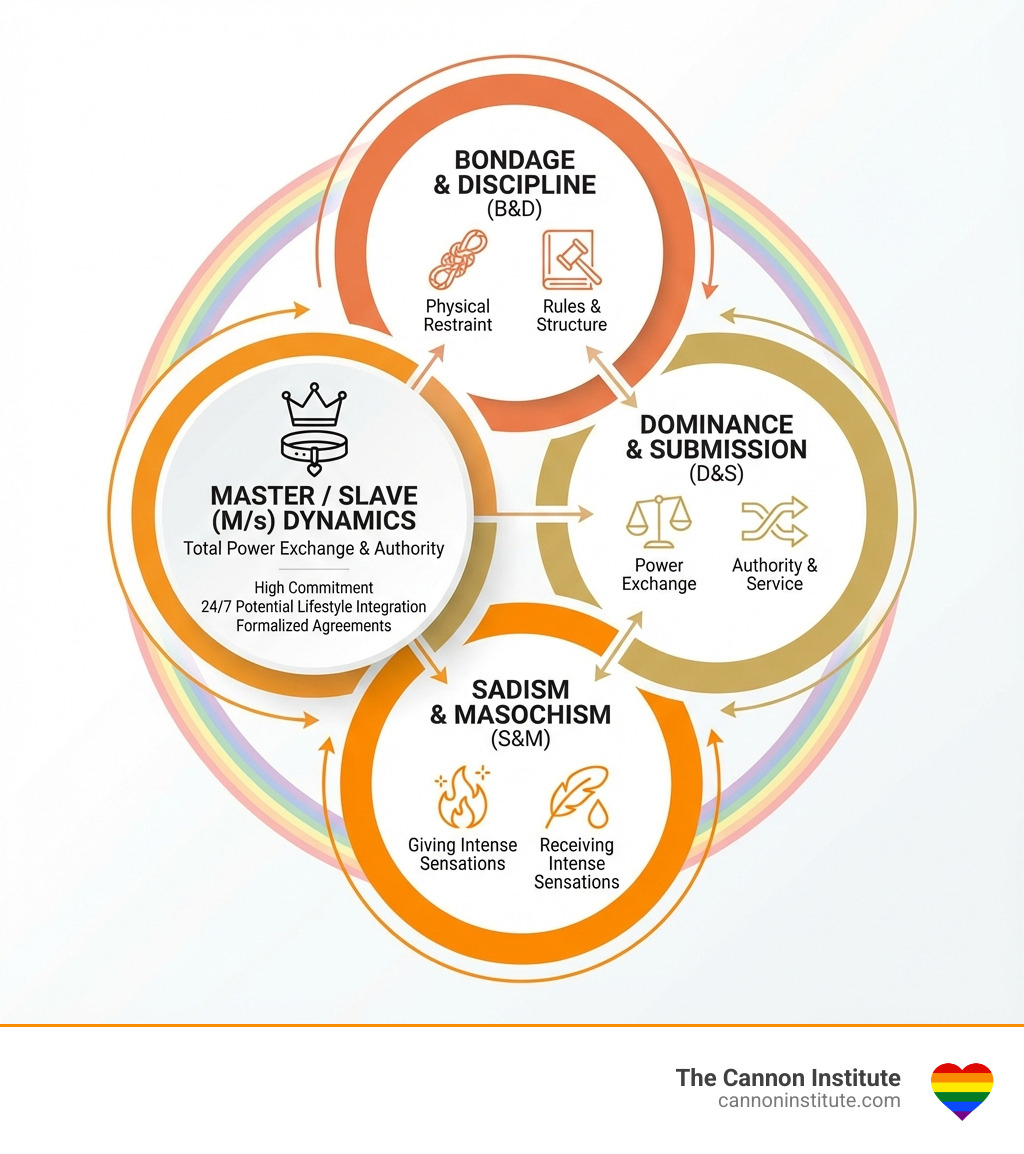
Gay slave kink terms explained:
Understanding the Core: Roles, Definitions, and History

This section defines the scope of gay slave kink, explores the distinct roles, and addresses the complex historical context.
Defining the Gay Slave Kink Dynamic
At its heart, gay slave kink is a specific expression within the broader BDSM (Bondage & Discipline, Dominance & Submission, Sadism & Masochism) community. It centers on a consensual power exchange where one partner, often referred to as the Master or dominant, assumes a role of authority, while the other, the slave or submissive, willingly surrenders control. This dynamic is a form of erotic servitude, where the slave’s primary purpose is to serve the Master, derive pleasure from obedience, and experience the unique psychological and emotional release that comes from relinquishing decision-making power.
The scope of gay slave kink is as varied as the individuals who practice it. It can range from specific scenes and roleplay during intimate moments to a more integrated, 24/7 lifestyle where the power dynamic influences daily interactions, chores, and personal decisions. The key differentiator is that all aspects are freely chosen, negotiated, and can be revoked at any time.
It is crucial to emphasize the profound distinction between modern, consensual gay slave kink and the horrific history of involuntary servitude. The term “slave” in a kink context is a roleplay, a chosen identity within a carefully constructed and consensual framework. It bears no resemblance to the historical subjugation, exploitation, and violence of chattel slavery. We understand that the use of such terminology can be sensitive, which is why we stress that modern kink is built on mutual respect, trust, and enthusiastic consent.
Historically, there is a painful past involving sexual exploitation and gender-based violence within the context of slavery. Research on “enslaved sissies” reveals how individuals assigned male at birth, who displayed gender non-conformity, were subjected to specific forms of abuse, harassment, and sexual violence as a tool of control within the institution of slavery. This was a systematic, institutionally sanctioned pattern of violence with devastating psychological and physical impacts. Our exploration of gay slave kink is firmly rooted in the present, focusing on consensual, empowering dynamics that are the antithesis of such historical atrocities. We find it critical to draw a clear line between consensual adult play and involuntary historical oppression. For those interested in the academic history of these painful dynamics, you can find more information here: Historical context of enslaved sissies.
For a deeper dive into the broader Master/slave dynamic, we encourage you to visit our page: More info about Master/Slave Kink.
The Spectrum of Roles: Master, Slave, and Sub
Within gay slave kink, as with BDSM generally, roles are not rigid but exist on a spectrum. However, there are distinct characteristics that define the primary positions:
- The Master (Dominant): This individual takes charge, sets the rules, and exerts control. In a constructive dynamic, the Master often acts as a caregiver and protector, listening to their partner’s needs and working to ensure their well-being and growth. Their role is to provide structure, guidance, and discipline, often finding satisfaction in the responsibility and the devotion shown by their slave.
- The Slave: This role involves a complete surrender of control to the Master. A slave is typically devoted both within and outside of sexual play, fulfilling wishes, following orders, and accepting discipline and training. Despite the complete surrender, a slave always retains the fundamental right to say no, especially via safewords, maintaining their autonomy within the consensual framework. The desire to relinquish control over one’s will and body is a central motivation for those in this role.
- The Submissive (Sub): A “Sub” also relinquishes control but typically to a lesser degree than a slave. A Sub might offer resistance, explore their boundaries, and engage in power exchange without the same level of complete devotion or 24/7 integration into their life. The Sub role can be seen as a preliminary stage to becoming a slave, with less extreme submission and more room for negotiation and testing limits.
- SERF: This term is sometimes used as an alternative to “slave,” particularly in the US, and is seen as carrying less historical baggage for some practitioners, though its meaning largely aligns with the slave role.
To better understand the nuances, here’s a comparison of the typical expectations and levels of commitment for a Submissive versus a Slave:
| Feature | Submissive (Sub) | Slave |
|---|---|---|
| Control | Relinquishes some control, but often with resistance | Complete surrender of control |
| Devotion | Primarily during scenes or specific agreed times | Often 24/7, integrated into daily life and identity |
| Boundaries | Actively explores and tests boundaries | Boundaries are established but rarely challenged or resisted |
| Training | May engage in discipline or training | Actively trained and disciplined by the Master |
| Autonomy | Maintains more personal autonomy | Relinquishes significant personal autonomy |
| Commitment | Can be session-based or short-term | Often long-term, high commitment, deeply relational |
| “Right to Say No” | Explicitly and frequently exercised | Always present, but used as a last resort (safeword) |
We understand that exploring these roles can be a journey of self-findy. If you’re curious about the broader world of BDSM and kink, we offer more information here: More info about BDSM & Kink.
The Psychology of Power Exchange
This section explores the deep psychological and emotional motivations for both dominant and submissive partners, highlighting potential benefits and risks.
Psychological Motivations in Gay Slave Kink
The allure of gay slave kink isn’t just about physical acts; it’s deeply rooted in psychological and emotional motivations that can be incredibly fulfilling for participants. For many, BDSM offers a unique avenue for self-exploration and personal growth.
For the slave or submissive, engaging in this dynamic can bring a profound sense of empowerment through submission. When many feel constantly pressured to be in control, the act of willingly relinquishing that control can be incredibly liberating. As one BDSM practitioner described it, the slave “feels free to live, be happy, and grow” while being “supported, loved, and cherished” by their dominant partner. This can lead to a powerful reduction in stress, as the burden of daily decisions is temporarily lifted. It’s a space where one can shed societal expectations and explore a more authentic, perhaps hidden, part of their identity.
For the Master or dominant, the motivations are equally complex and rewarding. This role often involves a deep sense of responsibility and caregiving. Dominants frequently act as protectors, taking pride in ensuring their submissive’s well-being, happiness, and growth. They listen attentively, guide, and support their partners in achieving personal goals. This caregiving aspect, combined with the psychological satisfaction of being in control and being served, can foster immense trust and intimacy within the relationship. It’s a powerful dynamic where both partners contribute to each other’s emotional fulfillment.
The long-term nature of many gay Master/slave relationships speaks to the profound psychological satisfaction they offer. Books such as “Ask the man who owns him: the real lives of gay masters and slaves” provide anecdotal evidence of numerous long-lasting relationships, some spanning over a decade, illustrating the depth of connection and commitment possible within these dynamics across various locations, including the US. This kind of longevity points to a deep-seated emotional and psychological resonance for those involved. You can learn more about these real-life accounts here: A book on the real lives of gay Masters and slaves.
Potential Benefits and Risks
When approached with care and intention, the benefits of engaging in gay slave kink can be transformative. These include:
- Mutual Growth: Both partners can learn about themselves, their desires, and their boundaries, evolving together within the relationship.
- Emotional Fulfillment: The deep trust and intimacy fostered by these dynamics can lead to profound emotional connection and satisfaction.
- Heightened Intimacy: The vulnerability and surrender inherent in the slave role, and the responsibility and care in the Master role, often create an unparalleled level of intimacy.
- Stress Relief: For those in demanding daily lives, relinquishing control (for the submissive) or taking complete charge (for the dominant) can be a powerful form of psychological release.
- Self-Findy: BDSM offers a unique space to explore hidden fantasies, desires, and aspects of one’s identity.
However, like any intense relationship dynamic, there are potential risks that must be acknowledged and managed:
- Potential for Dependency: Without clear boundaries and strong individual identities, there’s a risk of unhealthy dependency, especially for the submissive partner.
- Emotional Distress: If communication breaks down, boundaries are ignored, or trust is violated, emotional distress, anxiety, or trauma can occur.
- Misinterpretation of Roles: If the lines between consensual roleplay and real-life abuse become blurred, the dynamic can become destructive.
- Societal Stigma: External judgment and lack of understanding from society can create isolation or stress for individuals in these relationships.
Navigating these dynamics requires a high degree of self-awareness and, at times, professional guidance. At The Cannon Institute in Cherry Creek, we specialize in providing individual and couples counseling for the LGBTQ+ community, including those exploring BDSM and kink. Our research-based approach helps individuals and couples develop the tools for healthy communication, boundary setting, and emotional well-being within their chosen dynamics. We believe in fostering constructive relationships where both partners thrive. Learn more about how we support healthy relationships: Individual and Couples Counseling for the LGBTQ+ Community.
The Pillars of a Healthy Dynamic: Consent, Communication, and Safety
This section emphasizes the non-negotiable elements that distinguish consensual kink from abuse.
Consent, Trust, and Communication
The bedrock of any healthy gay slave kink relationship is enthusiastic consent, unwavering trust, and open communication. These are not merely suggestions but absolute requirements that differentiate consensual power exchange from any form of abuse.
We often refer to the principles of Safe, Sane, and Consensual (SSC). This framework emphasizes that all activities must be physically safe, mentally sound for all participants, and, most importantly, fully consensual. While SSC has been a foundational principle, some in the community also accept Risk-Aware Consensual Kink (RACK), which acknowledges that some activities inherently carry risks but can still be consensual and safe if participants are fully informed and prepared. It’s worth noting that the phrase “safe, sane, and consensual s/m” was coined by david stein in 1983 for the Gay Male S/M Activists (GMSMA) statement of purpose, though even he has expressed mixed feelings about its ubiquitous use.
Consent in gay slave kink is not a one-time agreement; it’s a continuous negotiation. This means:
- Pre-negotiation: Discussing desires, limits, hard limits (things that are absolutely off-limits), and safewords before any scene begins.
- Ongoing Check-ins: Regularly checking in with your partner during a scene, especially the submissive, to ensure they are still comfortable and enjoying the experience.
- Safewords: These are non-negotiable words or phrases (e.g., “red,” “yellow,” “green”) that allow a submissive to immediately stop or slow down a scene without explanation or judgment.
- Non-verbal Cues: Both partners must be attuned to each other’s body language and non-verbal signals, as these can also indicate discomfort or a need to pause.
Building trust is paramount. The submissive must trust that their Master will respect their boundaries, use safewords, and prioritize their well-being above all else. Conversely, the Master trusts that their submissive is being honest about their limits and desires. This mutual trust allows for deeper exploration and more intense experiences, knowing that a safety net is always in place.
Constructive Relationships and Formal Agreements
The concept of a “constructive relationship” is vital in understanding healthy BDSM dynamics, particularly in gay slave kink. A constructive relationship is one where both partners actively work together to build each other up, fostering mutual growth and support. In this context, power is not used for exploitation but for nurturing and ensuring both partners’ emotional and physical needs are met. This contrasts sharply with destructive dynamics, which are characterized by unmet needs, control for control’s sake, and emotional or physical harm.
As outlined in research, in a constructive BDSM relationship, the dominant partner often acts as a caregiver and protector, going to great lengths to ensure the submissive’s health and happiness. The slave, in turn, supports the dominant. While power is exchanged, the underlying principle is one of shared well-being, not equality in the traditional sense, but rather a balance where both find fulfillment.
Many gay slave kink relationships use formal agreements or “slave contracts.” These are not legally binding documents, but they serve as invaluable tools for clarifying expectations, setting boundaries, and ensuring both partners are on the same page. A well-crafted contract acts as a safeguard, enhancing anticipation and trust by explicitly defining the parameters of the relationship.
Common elements you might find in a BDSM slave contract include:
- Boundaries and Hard Limits: A clear list of what is and isn’t allowed.
- Duties and Responsibilities: Specific tasks or behaviors expected of the slave, and responsibilities of the Master.
- Safewords: Agreed-upon words to stop or modify a scene.
- Duration: Whether the dynamic is 24/7 or limited to specific times.
- Punishments and Rewards: Agreed-upon consequences for rule-breaking and incentives for good behavior.
- Communication Rules: How and when to discuss the dynamic.
- Aftercare Protocols: What happens after a scene to ensure emotional and physical well-being.
These agreements are living documents, open to review and renegotiation as the relationship evolves. The deliberate act of creating such a contract fosters open communication and mutual understanding. For those seeking guidance on structuring these agreements, resources like “SlaveCraft: roadmaps for consensual erotic servitude : principles, skills, and tools” offer valuable insights into ethical and practical approaches to consensual servitude. You can explore more about roadmaps for consensual erotic servitude here: A guide to consensual servitude.
For a comprehensive guide to safe practices and considerations, we recommend reviewing our BDSM & Kink Checklist.
Practices, Aftercare, and Modern Expressions
This section covers common practices, the crucial role of aftercare, and how the digital age has shaped the community.
Common Practices and the Importance of Aftercare
Gay slave kink encompasses a wide array of practices, all of which are engaged in consensually and within established boundaries. These can include:
- Roleplay: Engaging in scenarios that reinforce the Master/slave dynamic, from formal ceremonies to everyday interactions.
- Bondage: Physical restraint using ropes, cuffs, or other materials to improve feelings of submission and control.
- Service: The slave performing acts of devotion and utility for the Master, such as cleaning, cooking, or personal grooming.
- Discipline: Agreed-upon forms of punishment or training, which can range from verbal reprimands to spanking or other forms of sensation play.
- Fetishes: Incorporation of specific fetishes (e.g., foot fetish, uniform fetish) that improve the power dynamic and pleasure for both partners.
After any intense BDSM scene, especially those involving power exchange, aftercare is absolutely crucial. Aftercare refers to the practices that follow a scene to ensure the physical and emotional well-being of all participants. It’s a non-negotiable part of responsible kink practice.
- Physical Aftercare: This might involve cuddling, hydration, warmth, checking for any physical discomfort, or simply providing a comfortable, safe space to decompress.
- Emotional Aftercare: This is perhaps even more vital. It includes verbal reassurance, debriefing the scene, discussing feelings, and re-establishing connection outside of the power dynamic. The Master might reassure the slave of their care and affection, and the slave might express gratitude or feelings about the experience. This helps process any lingering emotions, prevents emotional distress, and reinforces the trust that underpins the relationship. It’s a time to reconnect as equal individuals, even if the dynamic is ongoing.
Aftercare is often where the “caregiver” role of the dominant shines brightest, ensuring their submissive feels safe, loved, and supported, bringing them back to a state of emotional and physical comfort.
The Influence of the Internet and New Dynamics
The internet has revolutionized the exploration and practice of gay slave kink, much like it has for other facets of human sexuality. Online platforms and social media have created unprecedented opportunities for individuals to:
- Find and Explore: Many find their interest in BDSM and gay slave kink through online resources, forums, and communities.
- Connect with Like-Minded Individuals: The internet facilitates finding partners, mentors, and community members who share similar interests, especially important in less visible subcultures.
- Share and Learn: Online spaces provide platforms for sharing experiences, asking questions, and learning about best practices, safety, and etiquette.
However, this digital landscape also presents challenges. Societal perceptions and stigmas surrounding BDSM and gay relationships continue to impact practitioners. While online anonymity can offer a shield, it also means that misinformation and misrepresentation can spread easily.
One fascinating new dynamic amplified by the internet is the concept of “Straight Cash Masters.” This refers to a phenomenon, particularly prevalent on social media platforms like X, where self-identified straight men act as “masters” to primarily gay individuals who take on “slave” roles. These relationships often involve financial domination (Findom), where the slave provides financial compensation to the Master, in exchange for control, verbal abuse, or other forms of power exchange.
Research indicates that these dynamics challenge traditional understandings of gender and sexuality. While these “Cash Masters” often maintain a “straight” identity, their engagement with same-sex individuals in dominant roles can be seen as “queering” the notion of straightness itself. They may deny sexual involvement, emphasizing that their motivation is financial, but the interactions often involve elements of fetishism (e.g., feet, muscles) and psychological power play that blur the lines of traditional sexuality. Social media acts as a space for these men to perform a curated version of masculinity and straightness, even as their actions paradoxically reveal underlying queer desires, whether acknowledged or not. This complex interplay of identity, sexuality, and financial exchange is a testament to how digital platforms are reshaping our understanding of human connection and desire. For a deeper academic exploration of this phenomenon, we recommend this research: Research on “Cash Masters” and changing sexuality.
Conclusion
Our deep dive into gay slave kink reveals a rich, complex, and deeply personal facet of human sexuality. Far from the misconceptions often held by mainstream society, consensual power exchange, especially in the context of Master/slave dynamics, is built upon a foundation of trust, communication, and enthusiastic consent. We’ve explored the distinct roles, the profound psychological motivations for both dominant and submissive partners, and the critical importance of distinguishing constructive, healthy relationships from destructive, abusive ones.
From the careful negotiation of boundaries and the use of safewords to the vital practice of aftercare, every aspect of gay slave kink is designed to maximize pleasure, growth, and safety for all involved. The internet and social media have further expanded avenues for exploration and connection, giving rise to new dynamics like the “Straight Cash Master” phenomenon, which continues to challenge traditional notions of identity and sexuality.
The journey of exploring kink is personal, valid, and for many, incredibly empowering. At The Cannon Institute, we believe in supporting healthy sexual exploration and helping individuals and couples steer these complex dynamics with self-awareness, respect, and clear communication. If you’re in Denver, CO, or the broader Colorado area, and seeking to understand your desires, improve your relationships, or explore gay slave kink in a safe and informed way, we are here to provide research-based, intentional support.
We invite you to learn more about how our specialized sex, intimacy, and relationship therapy can support your journey: Learn more about BDSM & Kink therapy