
Understanding the Role of a Sex Therapist
What does a sex therapist do? A sex therapist is a licensed mental health professional—such as a psychologist, marriage and family therapist, or social worker—with specialized training in sexual health and human sexuality. They help individuals and couples address emotional and psychological aspects of sexual concerns through talk therapy, education, and evidence-based interventions. Sex therapists work with clients to:
- Treat sexual dysfunctions like erectile dysfunction, orgasm difficulties, painful intercourse, and low libido
- Address relationship issues related to sex, including mismatched desire, communication problems, and infidelity
- Process sexual trauma and work through anxiety, fear, or shame around sex
- Explore sexual identity including orientation, gender identity, kinks, and alternative relationship styles
- Improve intimacy and connection through psychoeducation, communication skills, and homework exercises
In short, we work with virtually any matter related to sex, intimacy and relationships. Many people struggle with sexual concerns but hesitate to seek help. You’re not alone. Around 43% of women and 31% of men report some degree of sexual dysfunction, yet most sexual issues are highly treatable. Sex therapy provides a safe, confidential, non-judgmental space to explore these challenges and find lasting solutions.
Sex therapy is primarily talk therapy. Sessions do not involve any physical contact or sexual activity between therapist and client. Instead, sex therapists use approaches like Cognitive Behavioral Therapy (CBT), Emotionally Focused Therapy (EFT), mindfulness techniques, and psychoeducation to help clients understand and overcome their concerns. They may assign homework—such as communication exercises, sensate focus, or journaling—to practice between sessions.
I’m Dr. Neil Cannon, an AASECT Certified Sex Therapist and Supervisor with decades of experience, I’ve seen what does a sex therapist do to help clients reclaim their sexuality and strengthen their relationships through evidence-based, compassionate care. My work focuses on creating a research-based, intentional process that delivers sustainable change and hope for diverse individuals and couples.
Learn more about what does a sex therapist do:
What Does a Sex Therapist Do? Unpacking the Role and Scope
At its core, what does a sex therapist do is help individuals and couples steer the complex landscape of human sexuality. We are licensed mental health professionals, which means we hold advanced degrees and are trained in psychotherapy, just like other therapists. However, our specialized post-graduate training in human sexuality methods goes beyond the minimal amount of training typically required for general mental health licenses. This deep dive into sexual health allows us to address sexual concerns directly, from a scientific and affirming perspective.
Our primary role is to create a safe, supportive, and non-judgmental space where you can openly discuss your most intimate concerns. We use a biopsychosocial approach, recognizing that sexual health is influenced by biological, psychological, and social factors. This holistic view helps us understand the root causes of your concerns and tailor treatment to your unique situation.
Professional boundaries are paramount in our practice. Sex therapy is strictly talk therapy; there is no physical contact or sexual activity involved between the therapist and client. This ethical standard ensures a safe environment and is protected by our certifying body’s code of ethics, state laws, and the Health Insurance Portability and Accountability Act (HIPAA), which mandates strict client confidentiality. Your privacy is our priority, and any violation risks a therapist’s ability to practice.
Common Issues Addressed in Sex Therapy
People seek sex therapy for a wide array of concerns, and it’s often surprising how common these issues are. We help individuals and couples in Denver and across Colorado address challenges including:
-
Sexual Dysfunctions: These are perhaps the most common reasons people think of when asking what does a sex therapist do. We address issues such as:
- Erectile Dysfunction & Sex Therapy: Difficulty achieving or maintaining an erection.
- Painful intercourse (dyspareunia) or vaginismus.
- Orgasm difficulties (anorgasmia) or premature/delayed ejaculation.
- Desire and arousal issues, including Low Libido or difficulty with arousal.
- Mismatched desire between partners, where one person wants sex more or less frequently than the other.
-
Behavioral Concerns:
- Compulsive sexual behavior, sometimes referred to as “sex addiction” or “porn addiction,” which can cause distress and impact daily life.
-
Relationship Dynamics:
- Sexual issues often intertwine with relationship health. We help couples steer challenges like Infidelity, poor communication about sex, and general intimacy issues that strain the relationship.
-
Exploration and Identity:
- We provide a supportive space for individuals to explore their sexual identity, orientation, and expression. This includes understanding and integrating interests like BDSM & Kink into their lives, or navigating gender identity and sexual orientation.
-
Sexual Trauma Recovery:
- Healing from past traumatic sexual experiences is a significant area of our work. We help clients process these experiences and reclaim their sexuality in a sex-positive, empowering manner.
-
Other Concerns:
- Anxiety, fear, or shame related to sex.
- Body image issues impacting sexual confidence.
- Coping with STIs or chronic illnesses that affect sexual function.
- Cultural, religious, or societal views on sex that cause internal conflict.
Who Benefits from Sex Therapy?
The beauty of sex therapy is its inclusivity. Our services are designed to benefit a diverse range of individuals and relationships, reflecting the rich mix of our community in Denver and beyond.
- Individuals: Many people attend sex therapy on their own to address personal sexual concerns, explore their Women’s Sexuality, understand their desires, or heal from past experiences. It’s a powerful journey of self-findy and empowerment.
- Couples: Whether you’re in a new relationship or have been together for decades, couples therapy can help you improve intimacy, resolve conflicts, and revitalize your sexual connection.
- All Genders, Sexual Orientations, and Relationship Structures: We proudly affirm and support all individuals, including LGBTQIA+ clients and those in various relationship styles. This includes navigating consensual non-monogamy, such as Open Relationships or polyamory. Did you know that a recent poll found 34% of Americans prefer their relationship style to be something other than complete monogamy? We provide tools and guidance for these diverse relationship journeys.
- People with Chronic Illness or Life Changes: Illness, aging, menopause, or other life-stage transitions can significantly impact sexual health. We help clients adapt and find fulfilling sexual experiences amidst these changes.
- Post-Trauma Healing: For survivors of sexual trauma, sex therapy offers a crucial path to reclaiming their sexuality and rebuilding a positive relationship with their bodies and intimacy.
The Sex Therapy Process: From First Session to Lasting Change
Starting on a therapeutic journey can feel daunting, especially when discussing such personal topics. However, we strive to make the sex therapy process one of building trust and engaging in a collaborative effort. We believe that you are the expert in your own experience, and our role is to provide the guidance, tools, and insights to help you achieve your goals. Our approach is research-based and intentional, designed to provide immediate, targeted interventions that foster sustainable change and hope.

What to Expect in Your First Sex Therapy Session
Your first sex therapy session is an initial consultation, designed to be a comfortable and informative experience. Here’s what does a sex therapist do during this crucial first meeting:
- Creating a Safe Space: We prioritize establishing a safe, confidential, and non-judgmental environment. This is your space to share openly, without fear of criticism or shame.
- Discussing Your History: We’ll ask many questions to understand your unique situation. This includes your general health, sexual background, beliefs about sex, relationship quality, and any distress caused by your concerns. This biopsychosocial assessment helps us understand the various factors at play.
- Setting Goals: Together, we’ll begin to identify your goals for therapy. What changes do you hope to see? What does a fulfilling sexual life look like for you?
- Establishing Rapport: It’s perfectly normal to feel a bit nervous. The first session is also an opportunity for you to assess if you feel a good rapport with us. Your comfort and trust are essential for effective therapy.
- No Physical Contact: To reiterate, sex therapy sessions involve no physical contact or sexual activity. Everything happens through verbal communication and guided exercises.
Whether you’re seeking Individual Therapy to explore personal sexual concerns or Relationship Therapy with a partner, the first session sets the foundation for your therapeutic journey.
What does a sex therapist do with therapeutic techniques and homework?
Our practice is rooted in psychotherapy, employing a variety of evidence-based methods to help you achieve your sexual health goals. What does a sex therapist do in terms of techniques and assignments? We draw from:
- Cognitive Behavioral Therapy (CBT): This helps you identify and challenge negative thought patterns and behaviors that might be interfering with your sexual well-being.
- Emotionally Focused Therapy (EFT): Often used in couples therapy, EFT helps partners understand their emotional attachment patterns, fostering deeper connection and emotional safety, which are crucial for sexual intimacy.
- Mindfulness: Learning mindfulness techniques can help you stay present during sexual experiences, reduce anxiety, and increase pleasure.
- Psychoeducation: We provide accurate, scientific information about sexual anatomy, physiology, and the sexual response cycle, dispelling myths and increasing understanding.
- Communication Exercises: Improving how you talk about sex and intimacy with your partner is vital. We teach practical skills to express desires, boundaries, and concerns effectively.
A key component of our therapy often involves homework assignments. These are carefully designed exercises to be practiced in the privacy of your home, either alone or with a partner. They are never physically intimate with the therapist. Examples include:
- Sensate Focus: A structured series of touching exercises designed to reduce performance pressure and increase pleasure and intimacy through non-genital and then genital touch.
- Journaling: Reflecting on your thoughts, feelings, and experiences related to sexuality.
- Intimacy-Building Activities: Simple exercises like holding hands, cuddling, or sharing vulnerabilities to strengthen emotional connection.
- Masturbation Training: For individuals struggling with orgasm, this can involve guided exploration to understand one’s own body and pleasure.
These assignments are always custom to your comfort level and specific goals, ensuring a collaborative and empowering experience.
Duration and Potential Outcomes of Therapy
The duration of sex therapy can vary depending on the complexity of the issues and your individual goals. Many clients experience significant improvement within a few sessions, making sex therapy often a short-term, focused intervention. However, deeper-rooted issues or trauma might require a longer therapeutic journey. Session frequency typically starts weekly or bi-weekly, adjusting as you progress.
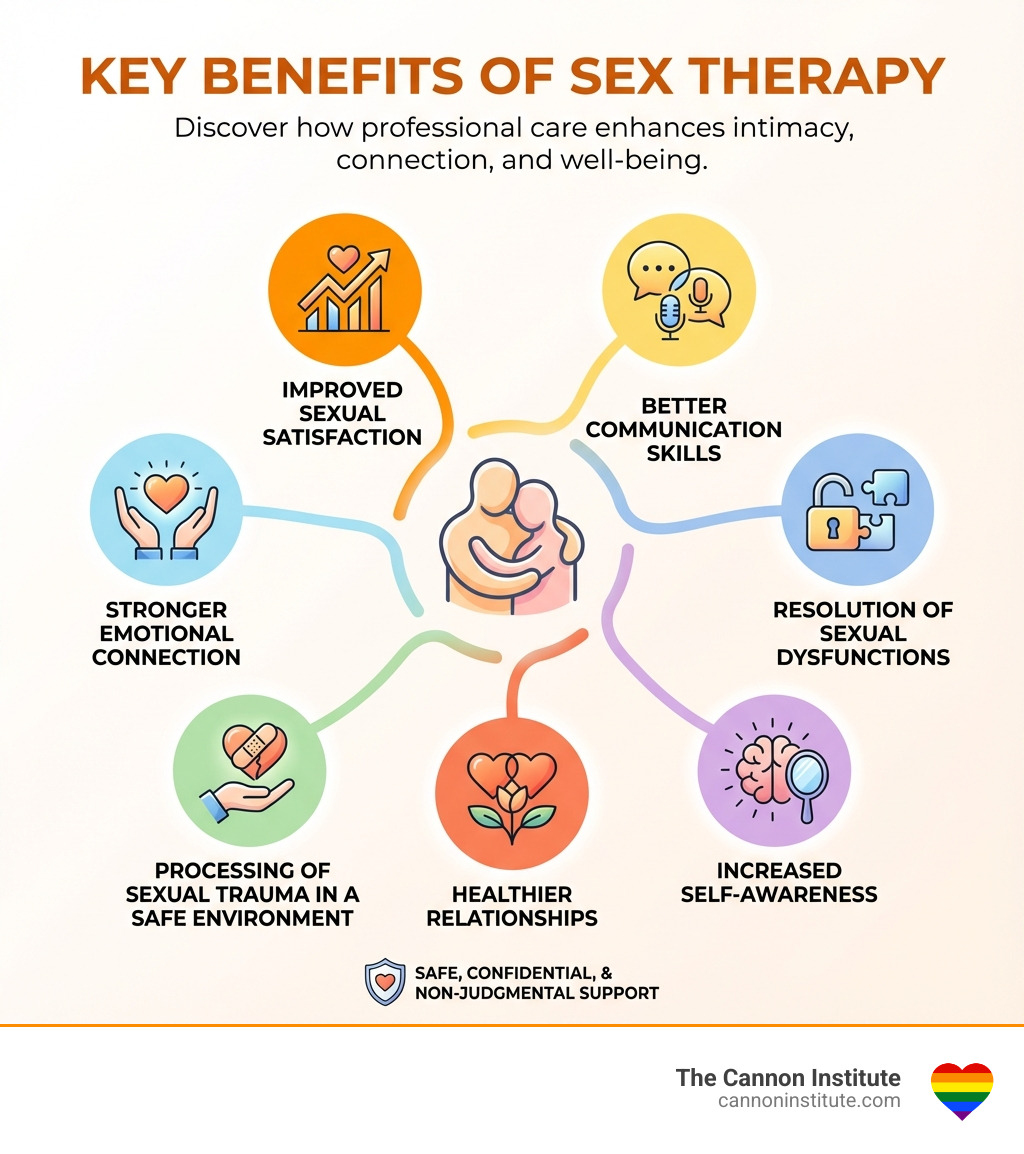
The potential benefits of engaging in sex therapy are profound and far-reaching. Clients often report:
- Improved sexual satisfaction: Refinding pleasure, overcoming dysfunctions, and expanding their understanding of what satisfying sex means.
- Increased intimacy and connection: Not just physically, but emotionally, leading to stronger relationships.
- Better communication: Learning to articulate desires, needs, and boundaries with confidence and clarity.
- Resolved dysfunctions: Addressing concerns like erectile dysfunction, painful sex, or low libido.
- Improved self-esteem: Feeling more confident and comfortable in their own skin and sexuality.
- Stronger connection: With themselves and their partners, fostering a more joyful and integrated sense of self.
Our research-based approach at The Cannon Institute focuses on creating sustainable change, offering you hope for a vibrant and fulfilling sexual life.
Finding the Right Professional: Therapists, Counselors, and Doctors
Navigating the healthcare landscape to find the right support for sexual concerns can be confusing. Making an informed choice is crucial to ensure you receive the specialized care you need.
Qualifications of a Certified Sex Therapist
When searching for a sex therapist in Denver or anywhere in Colorado, look for specific qualifications. A qualified sex therapist is always a licensed mental health professional first, which means they are a:
- Psychologist
- Marriage and Family Therapist (MFT)
- Clinical Social Worker
- Professional Counselor
Beyond their foundational license, they must have undergone extensive specialized post-graduate training in human sexuality and sex therapy methods. This specialized education and supervised clinical experience are what truly differentiates them.
The importance of certification cannot be overstated. We strongly recommend seeking a therapist certified by the American Association of Sexuality Educators, Counselors and Therapists (AASECT). AASECT certification signifies that the professional has met rigorous standards for education, training, and experience in the field of sexual health. While in many states, any therapist can market themselves as a “sex therapist,” AASECT certification provides a reliable benchmark for adequate training and expertise. You can use directories provided by organizations like AASECT to find a qualified provider.
What does a sex therapist do compared to a sex counselor?
While the terms “sex therapist” and “sex counselor” are sometimes used interchangeably, there are important distinctions in their scope of practice, approach, and the types of issues they typically address.
| Feature | Sex Therapist | Sex Counselor |
|---|---|---|
| Scope of Practice | Licensed mental health professional with specialized training in sexual health. | May or may not be a licensed mental health professional; broader range of backgrounds. |
| Treatment Approach | Uses psychotherapy (talk therapy), including CBT, EFT, etc., to diagnose and treat. | Takes a problem-solving approach; offers education, tools, and techniques. |
| Types of Issues | Addresses complex, long-term, and in-depth sexual problems, including underlying psychological issues, trauma, and mental health diagnoses. | Focuses on short-term problems, often rooted in relationship issues, requiring education or communication strategies. |
| Duration of Treatment | Can be short-term or long-term, depending on the complexity of the issue. | Typically short-term, providing immediate guidance. |
| Qualifications | Requires advanced clinical degree, psychotherapy training, and AASECT certification. | Requires extensive education in human sexuality; often AASECT certified. |
Essentially, what does a sex therapist do is dig deeper into the psychological and emotional underpinnings of sexual issues, offering comprehensive treatment. A sex counselor provides more direct education and practical strategies for less complex, often communication-based, sexual concerns. Both are valuable, but a sex therapist is equipped to handle a wider range of issues, including those with significant emotional or historical roots.
When to See a Sex Therapist vs. a Medical Doctor
It’s crucial to understand the interplay between physical and psychological factors in sexual health. Our general recommendation is:
- When to see a medical doctor first: If you are experiencing any new sexual dysfunction or pain, it is always wise to consult a medical doctor (such as a urologist, gynecologist, or your primary care physician) first. This is to rule out any underlying physical causes or medical conditions that might be contributing to your sexual concerns. For example, issues like erectile dysfunction or painful intercourse can sometimes stem from hormonal imbalances, vascular problems, or other health conditions.
- When to see a sex therapist: Once medical causes have been ruled out or are being managed, a sex therapist is the ideal professional to address the psychological and emotional factors impacting your sexual health. This includes performance anxiety, body image issues, past trauma, communication difficulties, or mismatched desires.
- Collaboration between professionals: Often, the most effective approach involves collaboration between medical doctors and sex therapists. We frequently work alongside medical professionals to ensure a holistic approach to your well-being, recognizing that mind and body are intricately connected.
Frequently Asked Questions about Sex Therapy
It’s natural to have questions about sex therapy, especially given the sensitive nature of the topic. Here, we address some of the most common inquiries we receive in our Denver practice.
Is sex therapy confidential?
Absolutely, yes. Confidentiality is a cornerstone of our professional ethics and a legal requirement for all licensed mental health professionals, including sex therapists. Your discussions in sex therapy are protected by:
- Professional code of ethics: Our certifying bodies, such as AASECT, have strict ethical guidelines that mandate client privacy.
- State laws: Colorado state laws uphold the confidentiality of therapeutic communications.
- HIPAA protections: The Health Insurance Portability and Accountability Act (HIPAA) is a federal law that sets national standards to protect sensitive patient health information from being disclosed without the patient’s consent or knowledge.
We are committed to creating a safe and trusting space where you can explore your most personal concerns without fear of judgment or disclosure. Violating client confidentiality is a serious breach that risks a therapist’s license and ability to practice.
Do I have to attend with my partner?
No, you do not have to attend sex therapy with your partner. Many individuals seek help on their own, and Individual Therapy can be incredibly effective for addressing personal sexual concerns, healing from trauma, exploring identity, or improving self-esteem related to sexuality.
However, if the core concerns are rooted in the relationship dynamic, such as mismatched desire, communication issues, or infidelity, then attending with your partner for Relationship Therapy is often highly beneficial. It allows both partners to engage in the process, improve communication, and work collaboratively towards shared goals. We can discuss the best approach for your specific situation during an initial consultation.
Is there any physical contact or nudity in sex therapy?
This is one of the most common misconceptions about sex therapy, and the answer is a resounding no. Sex therapy is strictly talk therapy. There is absolutely no physical contact or nudity involved between the therapist and the client during sessions.
Our ethical guidelines, and those of all reputable mental health professional organizations, strictly prohibit any form of sexual or intimate contact between a therapist and a client. This ensures the professional integrity of the therapeutic relationship and the safety of our clients.
It’s important to differentiate sex therapy from “surrogate partner therapy,” which is a separate and distinct field. While surrogate partner therapy might involve physical intimacy, it is conducted entirely separately from your sex therapist, and your work with your sex therapist remains strictly verbal and psychological. Our focus at The Cannon Institute is on providing a safe, verbal, and evidence-based therapeutic environment to help you achieve your sexual health goals.
Conclusion: Taking the Next Step Towards a Fulfilling Sex Life
We hope this guide has shed light on what does a sex therapist do and demystified the process for you. Sex therapy offers a powerful path to healing, growth, and greater intimacy, whether you’re an individual or a couple struggling with sexual challenges. It’s a safe, confidential, and effective process designed to help you overcome obstacles, deepen your connections, and refind joy in your sexual life.
At The Cannon Institute in Denver, Colorado, we are committed to providing a research-based, intentional process that delivers immediate, targeted interventions. Our goal is to ensure sustainable change and hope for diverse individuals and couples, helping you build the fulfilling sexual life you deserve. Don’t let shame or uncertainty hold you back any longer. Your path to a better sex life begins with reaching out.