
Why Understanding Intimacy Matters for Your Relationships
What is intimacy? Intimacy is a deep closeness and connection with another person, built on mutual trust, emotional sharing, and genuine understanding. It’s the vulnerability and acceptance that allows someone to truly see you—to “into-me-see.” While often including physical closeness, it extends far beyond sex to emotional, intellectual, experiential, and spiritual connection.
Quick Answer:
- Core Definition: A quality of relationship marked by reciprocal feelings of trust, emotional closeness, and open communication
- Key Elements: Vulnerability, self-disclosure, acceptance, warmth, and mutual understanding
- Not Just Sex: Intimacy can exist with or without physical touch; sex without emotional connection lacks true intimacy
- Universal Need: Present in romantic partnerships, friendships, and family bonds
Many people confuse intimacy with sex, but as one perspective puts it: “Sex is not intimacy. Intimacy is far deeper.”
When you understand someone’s core values, dreams, and fears—and they understand you in return—that’s intimacy. It’s the connection felt when couples talk all night or when friends share vulnerabilities without judgment. This is the foundation of meaningful, sustainable relationships.
Yet intimacy doesn’t just appear. Research shows that married couples reporting a deficiency or absence of intimacy have significantly higher rates of emotional illness symptoms. Without it, relationships suffer from loneliness, declining sexual satisfaction, and eroded trust.
The good news is that intimacy is a skill. It requires self-awareness, vulnerability, and effort, but the rewards are profound. Strong intimate connections improve mental and physical health, reduce stress, and create the deep satisfaction we all seek.
I’m Dr. Neil Cannon, an AASECT Certified Sex Therapist and instructor at the University of Michigan. I’ve spent decades helping people understand what is intimacy and how to cultivate it. Through this guide, I’ll share evidence-based insights and practical strategies to help you build the meaningful connections you deserve.
What is intimacy definitions:
What is Intimacy, Really? Beyond Physical Closeness
At its heart, what is intimacy? It’s a profound closeness that allows us to feel seen and understood. The word derives from the Latin “intimus,” meaning “inner” or “innermost,” suggesting a connection to our core being. Dictionary.com defines “intimate” as “a close union or combination,” which captures this essence of blending selves. It’s about feeling familiar with another person’s essence, not just knowing facts about them.
Common misconceptions often equate intimacy with sex or passion. While physical intimacy is a vital component of many romantic relationships, it’s not the entirety. Sex can be an expression of intimacy, but it is not the source. Similarly, passion can be a fiery, fleeting emotion that ignites a relationship, but intimacy is the enduring bond built on care and vulnerability that sustains it.
The Three Pillars of a Strong Relationship
Sternberg’s Triangular Theory of Love proposes that love has three interconnected components, or “pillars”:
- Intimacy Component: This pillar includes feelings of closeness, connectedness, and bondedness. It’s the warmth we feel when we can be truly ourselves with someone.
- Passion Component: This refers to the drives leading to romance, physical attraction, and sexual consummation.
- Commitment Component: This involves the decision to love someone and the commitment to maintain that love over time.
These pillars interact to form different types of love. A relationship with all three is “consummate love.” One with high intimacy and commitment but low passion is “companionate love,” common in long-term friendships or marriages. Understanding this shows that while passion and commitment are crucial, intimacy is the bedrock of genuine connection.
What is intimacy in different types of relationships?
Intimacy enriches a spectrum of relationships, not just romantic ones.
- Romantic Partners: Intimacy manifests as a deep emotional bond, shared vulnerability, and often, physical and sexual closeness. It’s the feeling of being each other’s confidant and safe harbor.
- Friendships: Our closest friendships are steeped in intimacy. We share laughter, support each other, and have meaningful conversations, building profound trust and understanding.
- Family Bonds: Family intimacy is rooted in shared history, unconditional love, and mutual support, providing a sense of belonging and security.
- Queerplatonic Relationships: These relationships defy traditional labels but feature a deep emotional bond and commitment, highlighting that intimacy is about the quality of the bond, not its romantic or sexual nature.
- Professional Connections: Even in professional settings, a degree of intimacy can develop through mutual respect, trust, and understanding, which allows for effective collaboration and psychological safety.
The Many Dimensions of a Close Bond

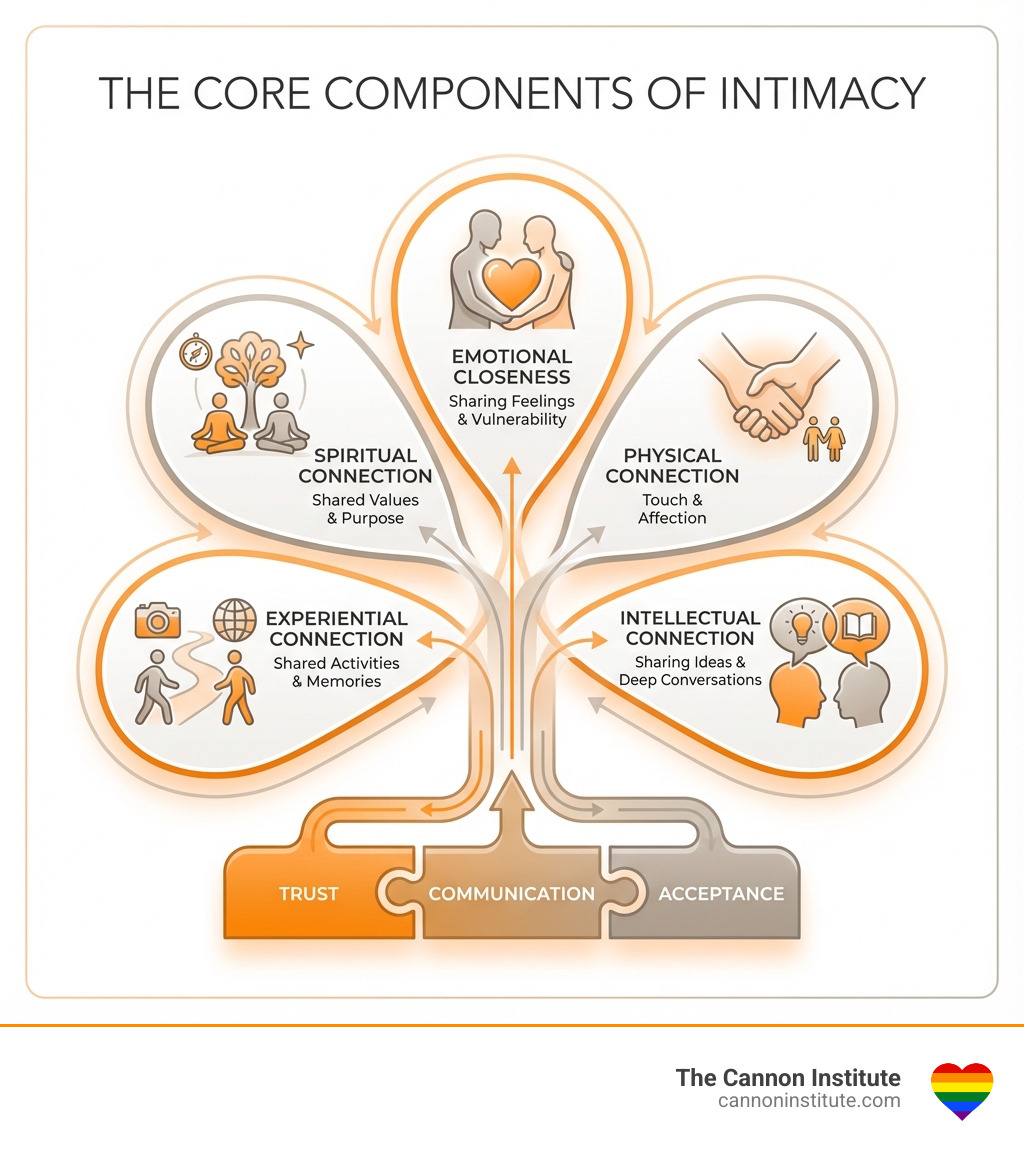
When we discuss what is intimacy, we’re referring to a rich mix of human connection. Understanding these different building blocks helps us cultivate deeper, more meaningful relationships in all areas of life.
Emotional Intimacy
Emotional intimacy is the cornerstone of connection. It’s the ability to share your deepest thoughts, feelings, and vulnerabilities, knowing you’ll be met with empathy and acceptance. This is where “into-me-see” truly happens. Research, like the Development and Validation of the Emotional Intimacy Scale, confirms its critical role in relationship satisfaction. When we disclose our inner world and our partner responds with warmth and care, it builds profound trust and reduces loneliness.
Physical Intimacy
Physical intimacy involves touch and closeness. While it includes sexual touch in romantic relationships, non-sexual acts like hugging, holding hands, or cuddling are equally vital for connection. Studies show affectionate touch is correlated with relationship satisfaction and can trigger the release of oxytocin, the “love hormone,” which promotes bonding. In our work with clients in Denver, CO, we emphasize that a warm hug can be as important for connection as romantic gestures.
Intellectual Intimacy
Intellectual intimacy blossoms when we share ideas and engage in deep conversations, respecting each other’s perspectives. It’s about stimulating each other’s minds and learning together. This connection builds mutual respect and a sense of partnership in intellectual exploration.
Experiential Intimacy
Experiential intimacy is forged through shared activities and creating lasting memories. Whether it’s traveling, trying a new hobby, or tackling a project together, these shared experiences create a unique narrative for your relationship. They provide opportunities for laughter, learning, and mutual support.
Spiritual Intimacy
Spiritual intimacy connects us on a level of shared beliefs, values, and purpose. It can involve discussing faith, exploring existential questions, or aligning on core values like compassion or social justice. A 2016 study cited spiritual intimacy as a key predictor of marital success. As suggested in Mark 10:8-10, it’s a merging of spirits and hearts, bringing a shared vision for life.
Why Intimacy is Essential for Well-being

Understanding what is intimacy is crucial because it’s a fundamental human need with profound impacts on our well-being. Intimate connections act as a buffer against life’s stressors, promoting mental and physical health.
A meta-analysis on marital quality and health found that strong relationships are linked to better physical health, including improved cardiovascular health and a stronger immune system. For mental health, intimacy combats loneliness and reduces symptoms of depression and anxiety. Sharing burdens and joys fosters resilience and happiness. An intimate partner’s presence can even lower physiological stress responses like blood pressure.
The Link Between Intimacy and Sexual Satisfaction
In romantic relationships, emotional connection fuels desire. Feeling seen and cherished creates psychological safety, allowing for greater openness and arousal. A lack of emotional intimacy, conversely, can decrease sexual desire and lead to disconnection.
Communication about sex is also a cornerstone of intimacy. Openly discussing desires, boundaries, and fantasies is essential for a mutually fulfilling sexual relationship, even though it can feel vulnerable.
Statistics highlight the challenges many couples face:
- One in five couples lives in a “sexless” marriage (sex less than ten times a year).
- About one-third of married couples have mismatched sexual desire.
- Only 40% of married couples report being “very satisfied” with their sex lives.
These numbers suggest many are missing the well-being that comes from a satisfying sexual connection. Studies show couples who have sex at least once a week report greater well-being, reflecting the deep connection it represents.
The Foundations: Trust, Communication, and Acceptance
All deep connections are built on these foundational elements:
- Trust: This is the belief that your partner has your best interests at heart. It’s earned through consistent honesty and reliability. Without trust, the vulnerability required for intimacy is impossible.
- Communication: Effective communication involves expressing yourself clearly and actively listening to understand and validate your partner. Research shows it leads to higher emotional and sexual intimacy.
- Acceptance: This means valuing your partner for who they are, flaws and all, without judgment. It creates a safe space where they feel loved for their authentic self.
- Self-Disclosure: Sharing private thoughts and experiences is a direct path to intimacy, but it requires partner responsiveness—meeting disclosures with appreciation, understanding, and acceptance.
Common Obstacles That Erode Intimacy
Building and maintaining intimacy can be challenging. Understanding common obstacles is the first step to overcoming them.
A major roadblock is the fear of vulnerability. True intimacy requires being seen, including our imperfections. Past hurts can make this terrifying, causing us to build walls instead of bridges. Other intimacy killers include poor communication, which lets resentment grow, and unresolved conflict, which erodes trust and safety.
Past trauma, such as infidelity, intimate partner violence, or childhood abuse, can make it incredibly difficult to trust others and feel safe. The WHO estimates that 30% of women have experienced physical or sexual violence from a partner, highlighting the devastating impact on future intimacy.
Infidelity is a profound breach of trust that can shatter intimacy. Other challenges include life stressors (financial pressure, demanding jobs) that deplete our emotional resources, and mismatched expectations about what intimacy should look like.
How Societal and Cultural Norms Shape Our Connections
Our understanding of what is intimacy is shaped by societal and cultural norms. Some cultures encourage open emotional expression, while others value reserve, making vulnerability harder. Traditional gender roles can also create mismatches, discouraging male vulnerability and socializing women to prioritize emotional connection. Furthermore, media portrayals often present idealized versions of love, setting unrealistic standards. The rise of online dating has also transformed how we connect; in 2023, the Pew Research Center found one in ten adults in a committed relationship met their partner online, a dynamic that can sometimes favor initial attraction over deeper compatibility.
How to rebuild what is intimacy after a breach of trust
A breach of trust like infidelity can feel destructive. In the U.S., 15-25% of adults report cheating on a partner, a challenge many relationships face. Rebuilding intimacy is difficult but possible with commitment from both partners.
- Acknowledge the Hurt: The betrayed partner’s pain must be seen and validated. The unfaithful partner must take full responsibility and express genuine remorse.
- Re-establish Safety: This requires radical transparency and consistent, trustworthy behavior over time. The betrayed partner needs to witness genuine change.
- Accept Forgiveness: Forgiveness is a process for the betrayed partner’s own healing, allowing them to release resentment. It doesn’t mean condoning the act.
Navigating this often requires professional help. Therapists specializing in infidelity can provide a structured space to process emotions and rebuild trust. Our team at The Cannon Institute in Denver, CO, offers guidance through our Adultery & Infidelity services. With dedication, couples can emerge with a deeper, more resilient understanding of what is intimacy.
A Practical Guide to Cultivating Deeper Connection
Understanding what is intimacy is one thing; cultivating it requires intentional, consistent effort. Think of relationships like a garden; they need regular tending to flourish. Small, consistent actions are often more impactful than grand gestures. This relationship maintenance—active listening, expressing appreciation, making time for each other—is vital for deepening your bonds.
Simple, Daily Practices to Strengthen Your Bond
Incorporate these simple daily practices to nurture intimacy:
- Quality Time: Carve out dedicated, uninterrupted time for each other, like a weekly date night or 15 minutes of device-free conversation. The key is focused, present attention.
- Expressing Appreciation: Regularly tell your loved ones what you appreciate about them. This communicates that you value them and strengthens your bond.
- Non-Sexual Touch: Accept the power of non-sexual affection. Hugs, holding hands, or sitting close can release bonding hormones and increase feelings of security.
- Sharing Successes: Actively celebrate each other’s achievements. Responding to good news with enthusiasm reinforces your role as each other’s biggest cheerleader.
- Daily Check-ins: Take a few moments each day to genuinely ask about each other’s experiences and feelings. This shows care and keeps you emotionally connected.
- Random Acts of Kindness: Surprise loved ones with small gestures that show you’re thinking of them, like a favorite snack or a thoughtful note.
Navigating Conflict to Build, Not Break, Intimacy
Conflict is inevitable, but how you steer it determines whether it erodes or strengthens your bond. Constructive conflict resolution can deepen intimacy.
- Use “I” Statements: Focus on your feelings and needs rather than blame. For example, say “I feel unheard” instead of “You always ignore me.”
- Avoid the “Four Horsemen”: Relationship researcher John Gottman identified four destructive patterns: criticism, contempt, defensiveness, and stonewalling. Work to replace these with healthier alternatives.
- Seek to Understand, Not Just Be Understood: Prioritize listening to your partner’s perspective. Ask open-ended questions and validate their feelings, even if you disagree.
- Take Breaks When Needed: If emotions run high, agree to take a short break to calm down before revisiting the discussion constructively.
If you struggle with recurring conflicts, seeking professional guidance can be beneficial. Explore our couples therapy services for more information.
Frequently Asked Questions about Intimacy
Can you have intimacy without sex?
Absolutely! This is one of the most common misconceptions about what is intimacy. While sexual activity can be a powerful expression of intimacy in romantic relationships, it is not a prerequisite for intimacy, nor is it synonymous with it. We can have deep emotional intimacy with friends, intellectual intimacy with colleagues, or spiritual intimacy within a community, all without any sexual component. In fact, many people find that true emotional, intellectual, and spiritual intimacy creates a stronger foundation for a fulfilling sexual relationship. Conversely, sex without any deeper connection can often feel hollow or unsatisfying, lacking true intimacy.
How is emotional intimacy different from friendship?
Emotional intimacy is a core component that often defines a deep friendship, but it’s important to distinguish between the two. Friendship is a broader category of relationship characterized by affection, trust, and mutual support. Emotional intimacy, specifically, is the degree of closeness and vulnerability within that friendship. You can have many friends, but only a few with whom you share the deepest levels of emotional intimacy—those who truly “into-me-see” and with whom you feel safe revealing your most sensitive thoughts and feelings. So, while emotional intimacy is a crucial ingredient in close friendships, not all friendships reach the same depth of emotional intimacy.
What if my partner and I have different intimacy needs?
It’s completely normal for partners to have different intimacy needs and preferences. One partner might prioritize physical touch, while the other might value deep conversations or shared experiences more. The key is not to have identical needs, but to communicate openly and respectfully about those differences. Discuss what makes each of you feel loved, connected, and truly seen. Explore ways to meet each other’s needs, finding compromises and creative solutions. This process of understanding and adapting to each other’s unique “intimacy languages” can actually deepen your connection and strengthen your bond, as it demonstrates care, effort, and a willingness to understand your partner’s inner world.
Conclusion: Your Journey Towards Deeper Connection
Understanding what is intimacy is a lifelong journey of vulnerability and connection. It’s not a destination but a path we walk with others, learning and growing. The reward is profound: relationships that enrich our lives, support our well-being, and bring a deep sense of belonging and joy.
At The Cannon Institute, we believe everyone deserves true intimacy. We know building these connections is challenging. That’s why our approach uses research-based, intentional processes for immediate, targeted interventions for individuals and couples in the Denver, CO area.
We are here to guide you, offering expert support to help you cultivate the meaningful connections you deserve.
Begin your journey with intimacy therapy at The Cannon Institute, and let us help you open up the power of “into-me-see.”